Leave Your Message

China Best Insulated Aluminium Door Profiles Supplier?

Choosing the best China supplier for Insulated Aluminium Door Profiles requires more than comparing prices. It demands technical judgment, practical experience, and careful verification. A suitable supplier should understand thermal-break design, profile thickness, polyamide strip quality, and compatible door hardware. These details influence insulation, strength, sealing, and service life.

Look for a manufacturer with documented production procedures and consistent quality control. Ask for material certificates, dimensional tolerances, coating specifications, and independent test reports. Useful performance data may include thermal transmittance, air permeability, water tightness, and wind-load resistance. Reliable suppliers can explain how these values were tested. They should also provide clear drawings, sample sections, installation guidance, and responsive technical support.

Small details matter. Check the corner joints. Inspect the gasket fit. Feel the profile finish.

A factory visit or live production audit can reveal more than polished brochures. Observe extrusion storage, thermal-break assembly, powder coating, and final inspection. Certifications can support credibility, but they do not replace evidence from current projects and customer references. Regional climate also matters. Profiles designed for a mild coastal building may not suit a cold northern project or a high-rise façade.

No supplier is perfect. Even experienced manufacturers may have communication gaps, delayed samples, or inconsistent batch performance. A responsible buyer should record these risks and request corrective plans. The strongest partnership combines tested materials, transparent communication, realistic lead times, and after-sales support. This approach helps identify a dependable China supplier, rather than simply choosing the cheapest quotation.

China Best Insulated Aluminium Door Profiles Supplier?

What Makes an Insulated Aluminium Door Profile Supplier the Best?

What makes an insulated aluminium door profile supplier the best? Practical experience starts with thermal performance, not attractive photographs. A reliable supplier should explain the profile’s thermal break, wall thickness, alloy grade, and tested U-value in clear language. Polyamide strips must fit tightly and remain stable during cutting and assembly. Small gaps can create cold bridges, condensation, and uncomfortable indoor temperatures.

Quality control should be visible. Ask for inspection records, material certificates, dimensional tolerances, and test reports from qualified laboratories. A dependable supplier can provide samples with accurate cross-sections, corner details, seals, and hardware channels. I have found that a sample often reveals more than a sales presentation. Look closely at the strip connection. Is it firm? Does the surface finish remain even around drilled areas?

Service matters after the order leaves the factory. The best supplier offers cutting guidance, installation drawings, packaging protection, and responsive technical support. Profiles should arrive labeled by batch, length, and finish, reducing mistakes on busy sites. Still, no supplier is perfect. Delivery delays, minor finish variation, or unclear drawings can happen. What matters is honest communication and a documented correction process. A careful buyer should compare several samples, test assembly compatibility, and request updated performance data before placing a large order.
What Makes an Insulated Aluminium Door Profile Supplier the Best?

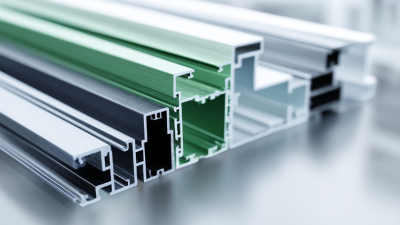
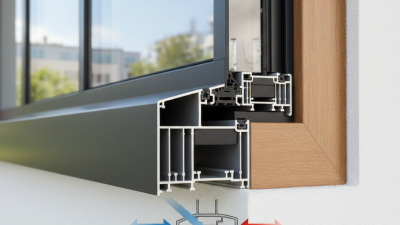
Thermal-break performance depends on the materials used in the profile system. Aluminium provides structural strength, while low-conductivity polyamide thermal barriers and EPDM gaskets help reduce heat transfer and improve insulation.

Representative thermal conductivity values: aluminium alloy approximately 200 W/m·K, PA66-GF25 thermal barrier approximately 0.30 W/m·K, EPDM gasket approximately 0.25 W/m·K, and insulating glass approximately 1.00 W/m·K. Lower values indicate better resistance to heat conduction. Actual values vary by alloy, formulation, and product design.

How Insulated Aluminium Door Profiles Are Designed and Manufactured

How Insulated Aluminium Door Profiles Are Designed and Manufactured

Insulated aluminium door profiles begin with climate, opening size, and expected traffic. Engineers select wall thicknesses that balance strength, weight, and material efficiency. The thermal break usually uses reinforced polyamide strips between the inner and outer aluminium chambers. This reduces heat transfer without making the frame unnecessarily bulky. Gaskets must remain flexible in cold and hot conditions. Small gaps can cause noticeable air leakage.

Manufacturing starts with precise extrusion dies and controlled aluminium billets. After extrusion, profiles are aged, cut, and inspected for straightness and surface quality. Thermal strips are inserted through dedicated assembly equipment, then rollers lock them into the aluminium channels. Corners require accurate crimping and careful sealing. A poorly adjusted machine can weaken the connection. It happens more often than drawings suggest. Finished sections should undergo dimensional checks, coating inspection, and practical tests for air, water, and wind performance. Hardware loads also need verification, especially on tall or frequently used doors.

Tips: Ask for thermal-break dimensions, alloy information, tolerance records, and test data. Review drainage paths before approving production. Check sample corners by hand. A profile may look excellent, yet installation errors can reduce its real insulation value. Leave room for improvement after the first production batch.

Which Materials and Technologies Improve Thermal Performance?

China Best Insulated Aluminium Door Profiles Supplier?

Thermal performance depends on more than aluminium thickness. Aluminium conducts heat quickly, so quality profiles need continuous polyamide thermal breaks. These barriers interrupt the heat path between indoor and outdoor surfaces. Low-emissivity double or triple glazing can further reduce radiant heat transfer. Warm-edge spacers and three-layer EPDM gaskets also help preserve the insulation line around the glass.

The International Energy Agency reports that buildings consume roughly 30% of global final energy. This makes door design a practical energy decision, not merely an appearance choice. However, a low frame U-value can mislead. Glass, edges, hardware, and installation often control the whole-door result. Test the complete door under EN ISO 10077 methods, rather than judging the profile alone. Suppliers should provide declared U-values, air-permeability results, water-tightness data, and thermal-bridge details. Ask for independent laboratory reports. That matters.

On site, a well-insulated profile still fails when installers leave gaps around the frame. A 10-millimetre cavity can create drafts, condensation, and uncomfortable cold spots. In coastal or humid regions, powder coating quality and drainage design deserve equal attention. I have seen attractive samples perform poorly after careless installation. The better specification combines polyamide width, glazing type, gasket geometry, corner connection quality, and verified installation tolerances. Selecting the “best” supplier therefore requires comparing tested door systems, not isolated catalogue numbers.

China Best Insulated Aluminium Door Profiles Supplier? - Which Materials and Technologies Improve Thermal Performance?

Material or Technology Typical Specification Thermal Performance Contribution Indicative Thermal Data Selection Considerations
Polyamide thermal break Glass-fibre-reinforced polyamide strips, commonly PA66 with approximately 25% glass fibre Separates the interior and exterior aluminium chambers, reducing direct heat conduction through the frame Polyamide thermal conductivity is typically about 0.25–0.35 W/m·K, depending on formulation and moisture content Verify strip width, mechanical retention, dimensional stability, and compliance with the applicable system standard
Wide thermal-break chambers Thermal-break widths commonly selected in the approximate 20–40 mm range for insulated door systems Increases the low-conductivity separation between aluminium faces and reduces the effective conductive heat path A wider break can lower frame Uf, but the final value depends on profile geometry, fasteners, glazing, and seals Use a wider chamber where climate, door size, condensation risk, or energy-code requirements justify the additional profile depth
Multi-chamber aluminium profiles Separated internal cavities created by thermal-break strips, ribs, and reinforced profile geometry Lengthens heat-flow paths and limits direct conduction across the frame Performance is calculated using two-dimensional or three-dimensional thermal modelling rather than chamber count alone Compare certified Uf values instead of selecting a profile only by the number of cavities
Low-conductivity insulating inserts Rigid polymer, foam, or mineral-based inserts positioned in selected hollow chambers Reduces air movement inside large cavities and adds insulation where profile geometry permits The insulation effect depends on conductivity, thickness, continuity, moisture resistance, and installation accuracy Check fire classification, water absorption, ageing resistance, and compatibility with drainage paths
Low-emissivity insulating glass Double or triple glazing with a low-emissivity coating and inert-gas-filled cavity Reduces infrared radiation and conductive heat transfer through the glazed area A typical double low-e unit may achieve centre-of-glass Ug around 1.0–1.2 W/m²·K; triple glazing can be lower, depending on build-up Specify coating position, cavity width, gas fill, spacer type, solar-control needs, and safety-glass requirements
Warm-edge glazing spacers Stainless-steel, hybrid, or polymer-based spacer systems with lower thermal conductivity than conventional aluminium spacers Reduces edge heat loss and improves the interior glass-edge temperature Can improve the linear thermal transmittance of the glazing edge; the exact result requires project-specific calculation Particularly useful for reducing condensation risk around the glass perimeter in cold or humid conditions
Continuous EPDM or silicone gaskets Multi-level compression seals at the frame, sash, glass, and threshold interfaces Limits air leakage and reduces convective heat loss through gaps around the door Air permeability is tested by pressure difference; sealing performance depends on compression, continuity, corners, and installation Look for replaceable gaskets, stable compression, properly vulcanised corners, and resistance to UV and temperature cycling
Thermally improved threshold Insulated sill with a polyamide separator, polymer base, or composite reinforcement Reduces the thermal bridge at the bottom of the door, where conventional metal thresholds can conduct significant heat Threshold design affects frame Uf, junction ψ-values, interior surface temperature, and air/water resistance Balance thermal performance with accessibility, drainage, weather resistance, door clearance, and local building regulations
Thermal-bridge-reduced hardware zones Insulated lock cases, limited metal penetrations, and carefully designed reinforcement locations Minimises local conductive paths created by locks, hinges, screws, and structural reinforcements Local thermal bridges may increase heat flow even when the nominal profile Uf is low Require thermal modelling or test evidence for large doors, heavily reinforced panels, and systems with extensive metal hardware
Powder coating or anodised aluminium finish Durable surface finish applied to the aluminium profile Provides corrosion and weather protection but has limited direct influence on the door’s U-value Surface colour can affect solar absorption; thermal-break geometry and glazing normally have a much greater effect on heat transfer Select coating durability, colour, gloss, and environmental classification separately from thermal performance
Technical note: U-values shown above are indicative ranges or performance references, not guaranteed product ratings. The complete door result depends on profile geometry, thermal-break width, glazing, spacer, gaskets, threshold, hardware, dimensions, and installation quality. Request project-specific Ud, Uf, air-permeability, water-tightness, and condensation-resistance data verified according to the applicable local or international test method.

How to Compare Quality, Certifications, and Supplier Capabilities

China Best Insulated Aluminium Door Profiles Supplier?

When comparing insulated aluminium door profiles, inspect the structure, not only the surface finish. A reliable profile should use consistent thermal-break strips, accurate wall thickness, and clean locking chambers. Check corner joints carefully. Small gaps can cause drafts, water entry, and poor insulation. Ask for tested U-values, air-tightness, water resistance, and wind-load results. These figures should match the exact profile series you plan to buy. Product photos can mislead. Physical samples are safer.

Certifications add confidence, but they do not replace technical review. Check the certificate number, issuing laboratory, validity period, and covered products. Quality-management certification can show controlled processes, while material and coating reports support durability claims. Ask whether testing followed recognized standards and whether reports are traceable. Supplier capability matters equally. Review extrusion equipment, thermal-break assembly, coating control, tooling support, inspection records, and packaging methods. Confirm sample lead times, minimum order quantities, replacement policies, and communication during design changes. A supplier may offer many profiles but lack stable production control.

Tips: Request one cutaway sample, one complete corner sample, and recent test reports. Compare measurements with a caliper. Ask for batch traceability. Do not rely on promises alone. A common mistake is choosing the lowest quotation before checking installation risks. I would also question unusually short delivery dates. They may reflect stock limitations, not efficiency. Recheck every assumption before signing.

What Applications and Customization Options Do Suppliers Offer?

China Best Insulated Aluminium Door Profiles Supplier?

Insulated aluminium door profiles suit apartments, offices, schools, hotels, and retail entrances. They use thermal-break technology to reduce heat transfer through the frame. Suppliers also develop systems for sliding doors, hinged doors, folding doors, and large glazed openings. Coastal projects may require stronger corrosion protection and careful drainage design. High-traffic buildings need durable hinges, reinforced corners, and stable locking zones.

Customization usually begins with profile dimensions and wall thickness. Buyers can request different frame depths, polyamide strip widths, glazing channels, and reinforcement chambers. Suppliers may provide anodized, powder-coated, or wood-effect finishes. Colour matching is possible, but samples should be checked under project lighting. Some suppliers also offer CNC cutting, drilling, corner processing, and pre-assembled frame sections. Useful details matter. CAD drawings and physical samples help confirm tolerances before production.

A reliable supplier should explain thermal performance, air tightness, water resistance, and wind-load testing. Ask how these results were measured. Laboratory performance may change after installation. That gap deserves attention. Custom tooling can improve appearance, yet it may increase cost and lead time. More metal is not always better. Experienced technical teams should review glass weight, hardware compatibility, drainage paths, and installation conditions before final approval. Clear inspection records, packing standards, and traceable material documents make procurement safer. The best choice depends on verified performance, practical support, and a design that fits the building rather than merely looking impressive.