How to Choose the Right Insulated Aluminium Extrusion for Your Project?
Choosing the right Insulated Aluminium Extrusion for your project is crucial. This decision impacts both energy efficiency and material performance. Insulated Aluminium Extrusions offer superior thermal insulation and are lightweight. However, the variety available can be overwhelming.
Different projects require different specifications. Understanding thermal resistance, design flexibility, and weight limits is essential. Each factor influences your final choice. Selecting an unsuitable type might lead to increased energy costs or project delays.
Moreover, collaborating with experienced professionals can enhance your decision-making process. Their expertise helps to avoid common pitfalls. It’s vital to recognize that what works for one application may not suit another. Reflect on your project's specific needs to make an informed choice.
Understanding the Basics of Insulated Aluminium Extrusions
Insulated aluminium extrusions are essential in modern construction. They provide energy efficiency and durability. According to industry reports, insulated aluminium frames can reduce heat transfer by 70% compared to non-insulated options. This makes them ideal for both residential and commercial projects.
When selecting insulated aluminium extrusions, consider thermal performance. The design impacts insulation's effectiveness. For instance, a well-designed multi-chamber system can significantly decrease energy loss. Data indicates that buildings using these systems can achieve up to 30% energy savings.
Furthermore, aesthetics cannot be overlooked. Although insulation is critical, the visual appeal of the extrusion matters too. A balance between functionality and appearance is vital. Professionals recommend involving architects early in the decision-making process. It's not just about efficiency; it's about creating a lasting impact.
How to Choose the Right Insulated Aluminium Extrusion for Your Project?
| Dimension (mm) |
Thermal Conductivity (W/m·K) |
Insulation Material |
Weight (kg/m) |
Applications |
| 50 x 50 |
200 |
Polyurethane |
3.5 |
Windows, Doors |
| 75 x 75 |
180 |
EPS Foam |
5.0 |
Curtain Walls |
| 100 x 50 |
150 |
XPS Foam |
4.0 |
Roofing Systems |
| 80 x 40 |
160 |
Polymer |
3.0 |
Partition Walls |
| 90 x 90 |
175 |
Glass Wool |
4.5 |
Industrial Applications |
Identifying Project Requirements for Insulated Aluminium Extrusions
When selecting the right insulated aluminium extrusion, it is crucial to identify your project's requirements.
Consider insulation performance. According to the Aluminium Association, insulating materials can reduce energy costs by up to 30%.
This indicates that selecting the right material can significantly impact energy efficiency. Evaluate thermal conductivity and resistance.
Various extrusions offer different thermal ratings. Understanding these factors will aid in making an informed decision.
Next, assess the environmental conditions of your project. Insulated aluminium extrusions must withstand various stresses.
Factors like exposure to humidity, UV light, and temperature fluctuations can affect lifespan. Industry reports suggest that
high-quality extrusions can endure harsh conditions without compromising integrity. Examine the specific needs of your project. For example,
will the extrusion be used in a commercial setting or a residential area? Each application may require additional features.
Lastly, don’t overlook the aesthetic aspect. The look and feel of the extrusion play a significant role in design.
Consider how different finishes impact not only appearance but also durability. Some extrusions might require more maintenance than others.
Reflect on your project's goals and constraints, as these factors will guide you in choosing the right insulated aluminium extrusion effectively.
Evaluating Different Types of Insulated Aluminium Extrusions
When evaluating different types of insulated aluminium extrusions, consider the project's specific needs.
Insulation performance, thermal efficiency, and structural integrity are paramount.
Different profiles can significantly affect energy consumption and comfort levels in buildings.
One approach is to review the insulation properties of each extrusion type.
Certain designs may offer superior thermal bridging performance. Look for models tested under various environmental conditions.
However, not all extrusions perform equally well; there's often a trade-off between structural strength and insulation capability.
Tips for selection:
1. Assess the thermal resistance. This affects long-term energy costs.
2. Analyze the profiles that suit your architectural design. They should blend functionality and aesthetics.
3. Seek professional advice, especially when in doubt. Experts can provide insight based on experience.
Using a reliable supplier is crucial. Research their reputation and the quality of their materials.
Remember, what works for one project may not be ideal for another.
The right choice often stems from detailed evaluation and expert feedback.
Factors to Consider When Selecting Insulated Aluminium Extrusions
When selecting insulated aluminium extrusions, several factors come into play. Start with thermal performance. The insulation value directly affects energy efficiency. Higher insulation ratings lead to better energy savings. This also impacts the overall comfort of your space. Look for extrusions that excel in thermal break technology. This feature prevents heat flow, making a noticeable difference.
Next, consider the structural integrity. Aluminium has great strength-to-weight ratio, but not all extrusions are the same. Some may lack durability under stress. Pay attention to the design of the extrusion. A robust design ensures long-lasting performance. Inconsistent manufacturing processes can lead to defects that compromise durability.
Aesthetic appeal is also important. Different finishes and colors can enhance the visual aspect of your project. Yet, remember that appearances shouldn’t come at the cost of functionality. Find a balance between beauty and performance. Reflect on your project’s specific needs. Testing samples is wise; it helps identify the best fit for your requirements. These details can make a significant impact on your project’s success.
Comparing Cost and Performance of Insulated Aluminium Solutions
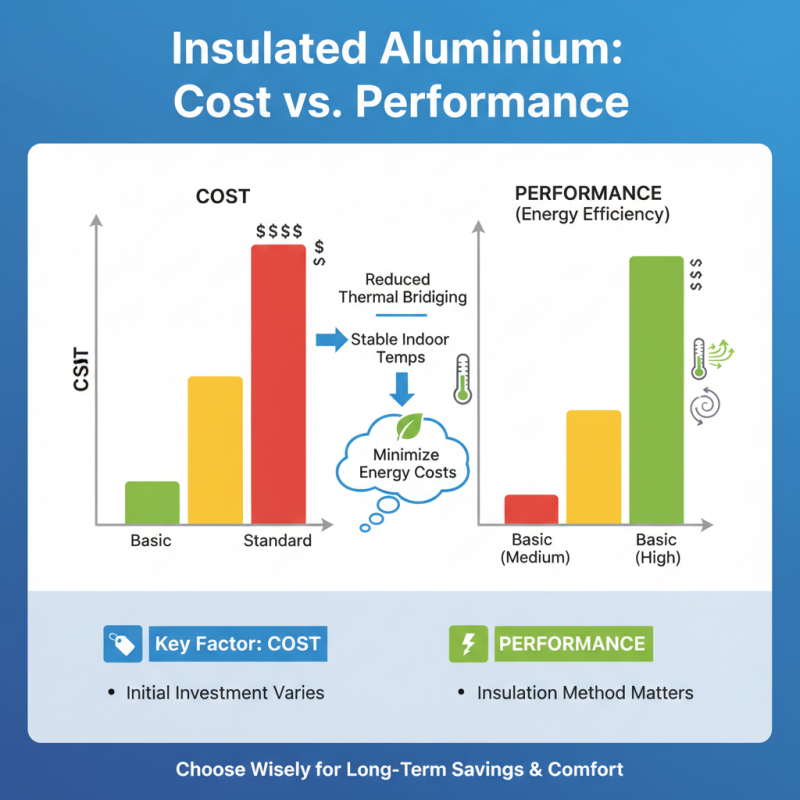
When selecting insulated aluminum extrusions, cost and performance are crucial factors. Insulated solutions can greatly enhance energy efficiency. They reduce thermal bridging, which helps maintain stable indoor temperatures. This is vital for both residential and commercial projects aiming to minimize energy costs. However, the performance of various insulation methods can vary widely.
Cost is often a primary concern. Insulated aluminum extrusions can range significantly in price. A slight difference in material quality can lead to a major price gap. It's important to weigh these costs against the potential energy savings. An expensive option may pay off in the long run through lowered energy bills. Evaluating these trade-offs requires careful consideration.
Revisiting material choices is essential. Some insulated solutions offer better thermal performance but might be over your budget. It's wise to balance both aspects. Explore options within your financial limits, while keeping performance in mind. Analyzing life-cycle costs can provide clarity. Ultimately, making an informed decision requires understanding both the upfront investment and the long-term benefits.