How to Choose Insulated Aluminium Extrusion Suppliers
Choosing the right Insulated Aluminium Extrusion supplier affects thermal performance, structural safety, installation speed, and long-term maintenance. A reliable decision requires more than comparing unit prices. It requires evidence from the factory floor.
Philip Crosby, a respected manufacturing quality expert, said, “You cannot inspect quality into a product.” This principle applies strongly to insulated aluminium systems. A supplier should control quality during billet selection, extrusion, thermal-break assembly, coating, and final inspection. Ask for test reports, production records, and traceable batch numbers. Review whether the supplier uses suitable polyamide, such as PA66 reinforced with glass fiber, rather than accepting vague descriptions.
Experience also matters. Examine sample profiles under real conditions. Check corner joints, gasket contact, surface finish, and dimensional tolerances with calipers. Ask how the supplier manages profile distortion, coating thickness, and thermal-break alignment. A small gap around a polyamide strip can become a serious weakness in a curtain wall or window frame.
Factory visits can reveal practical details that brochures hide. Look for clean assembly lines, calibrated equipment, organized storage, and trained inspectors. Confirm whether the supplier can provide customized dies, stable monthly capacity, packaging protection, and technical support after delivery. Certifications are useful, but they do not replace independent testing or production experience.
The cheapest quotation may conceal higher installation costs. Still, no checklist is perfect. Supplier promises can change, and even strong factories can make mistakes. Compare evidence, request trial orders, and document every technical requirement before signing. A careful supplier selection process gives Insulated Aluminium Extrusion projects a more dependable foundation.
Definition and Role of Insulated Aluminium Extrusions
How to Choose Insulated Aluminium Extrusion Suppliers
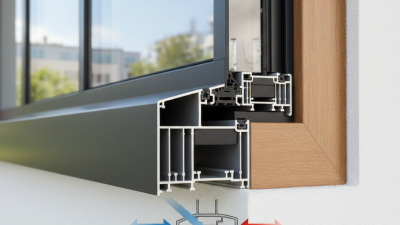
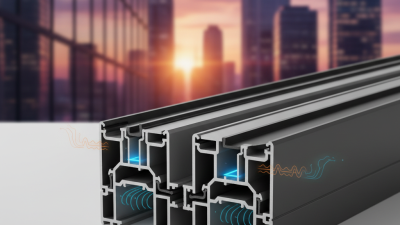
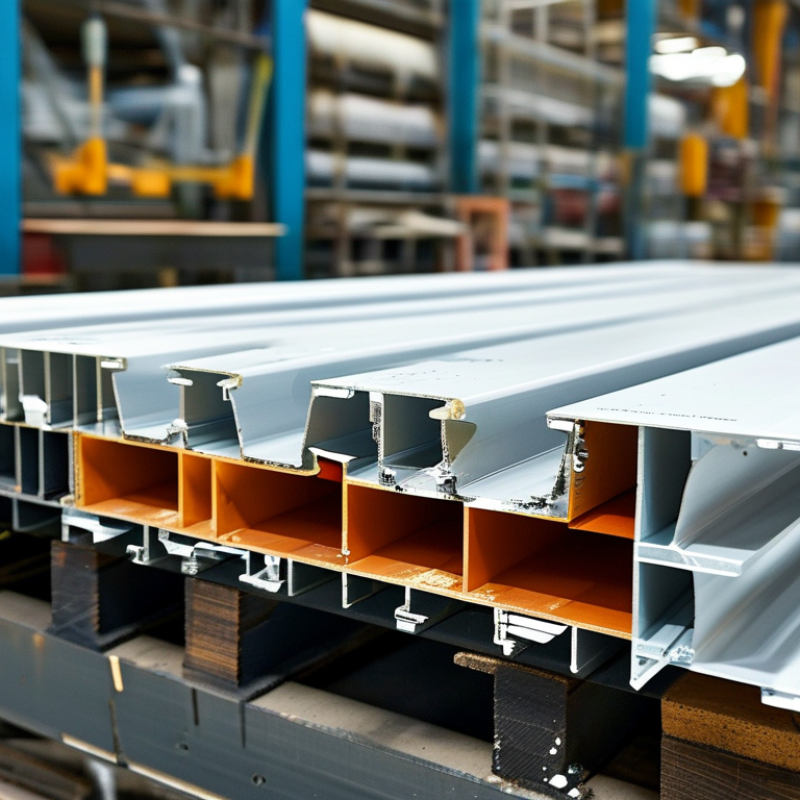
Insulated aluminium extrusions are aluminium profiles with a thermal break, usually made from reinforced polyamide. The barrier separates the inner and outer aluminium sections. This limits heat transfer through window, door, and curtain-wall frames. The profile still provides strength, accurate geometry, and a slim appearance. It is not insulation by itself. Poor installation can weaken its benefits.
The U.S. Department of Energy reports that windows can cause 25–30% of residential heating and cooling energy use. A properly designed thermal-break system can reduce conductive losses and surface condensation. This matters in offices with large glass areas and humid interiors. The 2023 UNEP Global Status Report states that buildings consumed about 34% of global energy in 2022. Supplier decisions therefore affect more than frame appearance. Request tested U-values, thermal-break dimensions, alloy grades, and air-tightness results. Industry claims can sound precise, but they still require verification.
Tips: Compare complete system data, not aluminium price alone. Ask for independent test reports and production tolerances. Check whether the supplier controls extrusion, thermal-break assembly, coating, and inspection. The International Aluminium Institute notes that recycled aluminium requires about 95% less energy than primary aluminium. Ask about recycled content and traceability, while checking whether it meets the project’s strength requirements. A cheaper profile may look efficient on paper, yet fail after poor corner assembly or inconsistent insulation strips. That risk deserves honest review.
How to Compare Materials, Insulation, and Product Specifications
Choosing an insulated aluminium extrusion supplier requires more than comparing prices. Compare the material first. Common 6000-series alloys offer a practical balance of strength, corrosion resistance, and machinability. Ask for alloy certificates, temper details, and recycled-content records. The International Aluminium Institute reports that recycled aluminium requires about 5% of the energy used for primary production. That figure matters, but traceability still matters more.
Insulation changes performance. Aluminium conducts heat quickly, so a thermal break is essential for energy-efficient frames. Compare the insulating material, width, mechanical strength, and connection quality. Do not accept “high insulation” as a specification. Request tested U-values, air leakage results, and condensation calculations. ISO 10077-2 provides recognized methods for calculating thermal performance in windows, doors, and shutters. In my experience, a narrow thermal break can look acceptable but underperform at corners. The detail is easy to miss.
Tips: Request samples before approval. Measure wall thickness with a gauge. Check surface finish under direct light. Review dimensional tolerances, straightness, cut length, and packaging protection. The U.S. Department of Energy identifies window performance as a major factor in building energy use. Still, one uncomfortable lesson remains: laboratory results may not match installation conditions. Ask suppliers for independent test reports, batch numbers, and corrective-action records. Compare total performance, not only kilograms or price.
Evaluating Quality Control, Certifications, and Technical Support
When selecting insulated aluminium extrusion suppliers, quality control deserves more than a polished product sample. Ask how incoming alloy is tested and recorded. Check whether operators measure wall thickness, profile dimensions, and thermal-break alignment during production. A sample may look perfect. Batch consistency matters more. Request inspection reports with heat numbers, tolerances, and corrective-action records. Photos of gauges, storage racks, and finished profiles can reveal practical discipline.
Certifications add confidence, but they need careful interpretation. Confirm the certificate’s scope, issuing body, validity, and audited site. ISO 9001 can show process control, yet it does not prove every extrusion meets your design requirements. Ask for relevant test evidence, including thermal performance, coating adhesion, dimensional accuracy, and mechanical properties. Requirements may vary by market and application. Independent test reports are useful when they identify the exact profile, alloy, batch, and test method. Do not accept generic files without traceability.
Technical support often separates a dependable supplier from a merely low-cost one. Before ordering, discuss die design, minimum wall thickness, insulation details, tolerances, and expected production volume. A capable engineer should review drawings and flag weak corners or difficult bends. Ask how quickly they handle tooling changes, failed samples, and urgent questions. Request a pilot run and a physical sample before full production. The process may expose flaws in your own drawing. That is valuable, though inconvenient. Clear communication, named contacts, and documented revisions reduce expensive misunderstandings.
Reviewing Costs, Lead Times, Customization, and Supplier Reliability
How to Choose Insulated Aluminium Extrusion Suppliers
An attractive unit price can hide important expenses. Ask for a complete quotation before comparing suppliers. Include tooling, insulation strips, surface treatment, packaging, and freight. Then compare material grades and profile weights. A cheaper profile may use less aluminium and reduce strength. Get it in writing.
Lead time should cover more than extrusion. Confirm die production, sample approval, batch manufacturing, and final inspection. Ask how quickly the supplier can replace damaged tooling. A practical supplier should provide milestone dates, not vague promises. Request a small trial order when possible. It exposes delays early.
Customization also affects cost and scheduling. Provide drawings with tolerances, corner details, thermal-break requirements, and cutting lengths. Ask whether the supplier can manage design changes without restarting the entire process. Some suppliers accept complex drawings but lack stable production controls. I have seen projects lose weeks because one tolerance was never discussed. That mistake is easy to repeat.
Reliability requires evidence, not confident language. Review test reports, inspection records, production capacity, and traceability procedures. Check how defects are reported and corrected. Ask for recent samples from ordinary production, not only polished showroom pieces. Communication matters too. A supplier who answers clearly during quotation usually handles problems better later. Still, no supplier is perfect. Keep written specifications, approval records, and a backup source.
How to Choose Insulated Aluminium Extrusion Suppliers — Reviewing Costs, Lead Times, Customization, and Supplier Reliability
Indicative market comparison for insulated aluminium extrusion sourcing. Costs and lead times vary according to alloy, profile size, thermal-break design, order volume, tooling, finish, testing requirements, and delivery destination.
| Supplier Profile |
Typical Ex-Works Price
USD/kg |
Standard Production Lead Time |
Custom Tooling Lead Time |
Customization Capability |
Minimum Order Practice |
Reliability Indicators |
Overall Assessment |
Profile A
Large-scale integrated producer |
4.80–7.20 |
4–6 weeks after drawing approval |
3–5 weeks |
High: custom dies, thermal barriers, anodizing, powder coating, drilling, cutting, and assembly |
Usually 500–1,000 kg per profile or production batch |
Stable capacity, formal quality systems, documented process control, and regular inspection records |
Best for repeat programs and high annual volumes |
Profile B
Mid-sized specialist |
5.10–7.80 |
5–8 weeks after drawing approval |
4–6 weeks |
High: strong support for complex profiles, thermal-break insertion, and small design changes |
Often 300–800 kg per profile, with negotiation for trial orders |
Responsive engineering support, batch traceability, and flexible production scheduling |
Strong balance of flexibility and cost |
Profile C
Regional fabricator with extrusion partners |
6.00–9.00 |
6–10 weeks after technical confirmation |
5–8 weeks |
Moderate to high: good finishing and fabrication options, but extrusion capacity may be outsourced |
Typically 200–500 kg per profile |
Shorter communication channels and convenient local support; verify subcontractor controls |
Suitable for medium volumes and local delivery needs |
Profile D
Low-volume customization supplier |
7.50–11.50 |
8–12 weeks after drawing approval |
6–10 weeks |
Very high for prototypes, unusual geometries, short cut lengths, and mixed finishing requirements |
Often 50–250 kg per profile, depending on die and finishing requirements |
Flexible order handling, but capacity and delivery consistency require closer monitoring |
Best for prototypes, replacement parts, and low-volume projects |
Profile E
Commodity-focused volume supplier |
4.30–6.50 |
5–9 weeks after drawing approval |
4–7 weeks |
Moderate: standard thermal-break systems and common surface treatments are usually preferred |
Usually 1,000–3,000 kg per profile or consolidated order |
Competitive pricing and high throughput; verify engineering response times and inspection documentation |
Best for standardized profiles and large purchase volumes |
|
Evaluation note: Ex-works prices are indicative ranges for finished insulated aluminium extrusion and exclude tooling, packaging, freight, duties, installation hardware, and taxes. A practical supplier review should also verify alloy certificates, dimensional inspection reports, thermal performance data, coating warranties, sample approval procedures, corrective-action records, and on-time delivery history.
|