China’s aluminium window industry has become a major manufacturing base for energy-efficient building components. This guide examines China Top 10 Insulated Aluminium Window Profiles Suppliers through a practical, evidence-based lens. It focuses on product quality, thermal performance, production capability, testing, and international service.
The International Energy Agency reported that buildings consumed about 30% of global final energy in 2022. The sector also produced approximately 26% of energy-related emissions. The UNEP Global Status Report for Buildings and Construction 2023 used a broader scope. It estimated that buildings and construction represented about 34% of global energy demand and 37% of energy-related emissions. These figures explain why Insulated Aluminium Window Profiles matter in modern façades.
A reliable profile supplier should provide clear U-value data, thermal-break specifications, alloy grades, and dimensional tolerances. Look for evidence from accredited laboratories, ISO 9001 systems, and relevant standards such as EN 14024 or EN 14351-1. Certifications must be checked carefully. A logo alone proves little.
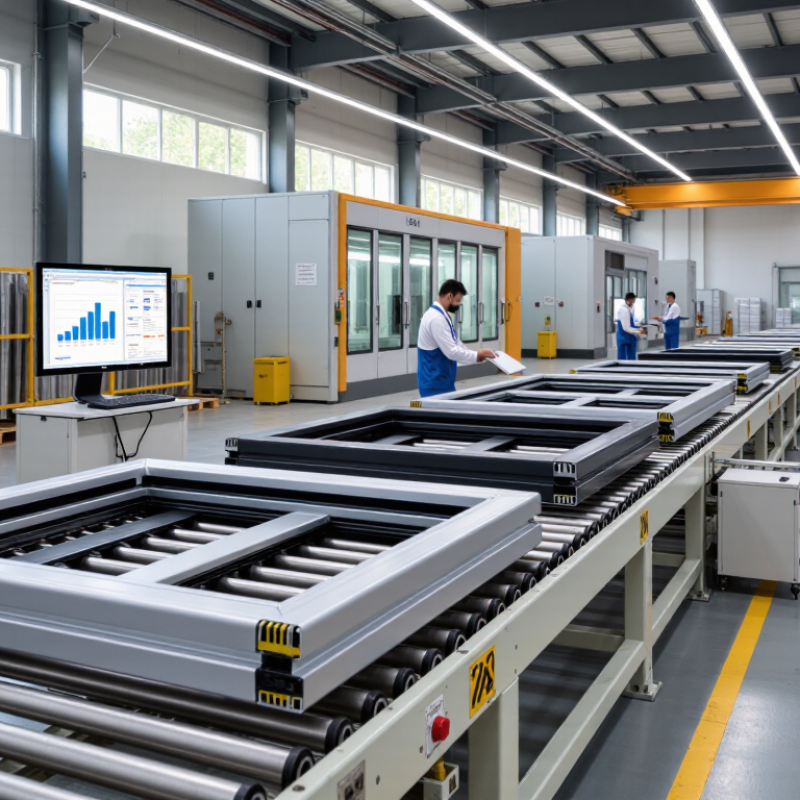
This article compares suppliers using visible manufacturing evidence, project experience, export markets, customization ability, and technical support. Factory scale matters. So do extrusion temperature control, polyamide strip quality, powder-coating thickness, and packaging details. A damaged corner can undermine an excellent profile.
Published supplier data is not always consistent. Some companies report capacity, while others disclose verified output. That makes direct ranking imperfect. Still, the comparison offers a useful starting point for architects, fabricators, developers, and importers seeking dependable Chinese partners. Always request current test reports and physical samples before signing a contract.
When comparing China’s top insulated aluminium window profile suppliers, U-value should be checked first. It measures heat transfer through the window system; lower values indicate better insulation. However, profile U-value is not the same as whole-window U-value. Glass, spacers, seals, frame size, and installation can change the final result.
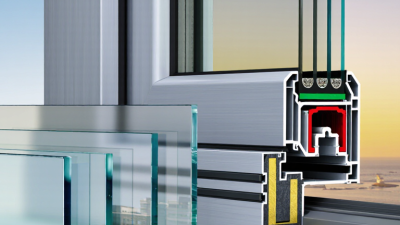
A practical thermal break uses a low-conductivity polyamide strip between aluminium sections. It interrupts the metal path that carries heat indoors. The difference is visible on a cold morning, when an unbroken frame may feel icy or collect condensation.
EN ISO 10077-2 provides calculation methods for window thermal performance. For verified comparisons, request tested or calculated results for the complete assembly, not only the extrusion.
The U.S. Department of Energy reports that windows can cause 25–30% of residential heating and cooling energy use. Small details matter. The International Energy Agency’s Buildings 2023 report states that buildings account for about 30% of global final energy demand.
Energy labels may also include solar heat gain, air leakage, visible transmittance, or climate-zone ratings. Lower U-value is useful, but it is not the whole decision. A supplier should provide thermal-break width, alloy specifications, test conditions, and certification records. I would question unusually low figures without installation details. Paper performance can disappoint in a poorly sealed building.
China Top 10 Insulated Aluminium Window Profiles Suppliers
A credible ranking begins with the thermal break, not a polished catalogue. Profiles with 20–35 mm polyamide strips usually offer a practical balance between insulation, strength, and material use. Wider breaks can reduce heat transfer, but they may increase frame width and fabrication demands. Site conditions matter.
U-values require careful comparison. Some suppliers report frame Uf, while others promote whole-window Uw. These figures are not interchangeable. Ask for test reports showing the laboratory method, profile size, glazing configuration, and boundary conditions. A lower number looks impressive, but poor installation can weaken real performance. We have seen small gaps around a frame create noticeable cold spots near the sill.
Certifications add another layer of confidence. Strong candidates provide current evidence for thermal performance, air permeability, water tightness, and wind resistance. Factory quality systems, traceable batch records, and independent laboratory reports deserve more weight than attractive claims. Certification names differ by market, so buyers should verify scope and expiry dates.
The top ten should also be assessed through production consistency. Check corner joints, strip alignment, coating adhesion, and tolerance control on sample sections. A supplier may meet a 30 mm specification on paper, yet deliver uneven inserts in production. That detail is easy to miss. It should not be. The ranking remains partly judgment-based because climate, glazing, hardware, and installation skills can change the final result.
Ranking criteria benchmark: thermal-break width, target window U-value, and certification coverage
The chart compares commonly specified performance thresholds for insulated aluminium window systems. Thermal breaks from 20–35 mm are shown against target whole-window U-values; lower U-values indicate better thermal insulation. Certification counts refer to commonly requested compliance categories, including ISO 9001, ISO 14001, CE, and relevant Chinese GB/T testing documentation.
China’s Top 10 Insulated Aluminium Window Profile Suppliers deserve careful comparison, not quick approval.
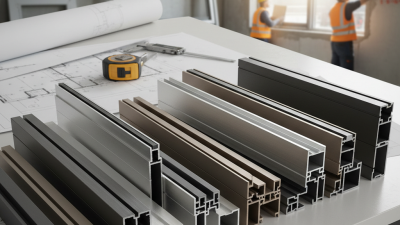
This guide focuses on manufacturers with practical production experience, stable quality systems, and documented export capability. Their profiles commonly use aluminium alloy frames, polyamide thermal breaks, EPDM seals, and powder-coated or anodised finishes.
A reliable supplier should provide alloy certificates, section drawings, test reports, and clear production tolerances.
Look for evidence of air-tightness, water resistance, wind-load performance, and thermal insulation.
U-value data should identify the complete window system, not only the aluminium profile. That gap matters. Factory audits can also reveal die maintenance, extrusion control, coating consistency, and packaging methods. Details matter.
Project conditions still change the ranking. A coastal building may need stronger corrosion protection, while a cold-region project requires better thermal-break design. Ask whether the supplier can produce custom dies and match hardware channels accurately.
Communication is another practical test; delayed revisions often become installation problems. I have found that sample corners reveal more than polished brochures. Small surface marks, uneven joints, or loose inserts should not be ignored.
The list is useful, but it is not permanent. Supplier performance can change with new equipment, staff turnover, or rising order volume. Careful verification remains necessary before signing a contract.
When comparing China’s top insulated aluminium window profile suppliers, standards matter more than polished brochures. EN 14351-1 defines product characteristics for external windows and doors, including air permeability, watertightness, wind resistance, and thermal performance. It supports conformity assessment, but it does not replace project-specific testing. Ask for complete test reports, not isolated laboratory values.
ISO 10077-1 calculates window thermal transmittance, or Uw, from frame, glazing, spacer, and junction data. A lower Uw generally indicates better insulation. However, profile-only Uf values can mislead when glazing occupies most of the opening. The International Energy Agency reported that buildings used about 30% of global final energy in 2022. Small thermal errors can therefore become expensive across large façades. Check the calculation boundary, dimensions, and assumed materials.
AAMA performance evaluation uses classifications for structural strength, air leakage, water penetration, and operating force. Its test methods often reflect severe weather testing, such as pressure cycling and controlled water exposure. The U.S. Department of Energy reports that windows can represent 25–30% of residential heating and cooling energy use. Suppliers should provide comparable air-leakage and water-resistance results, with test sizes clearly stated. One weakness remains: standards are not perfectly interchangeable. A European classification may not predict North American field behavior. I would compare measured evidence, installation details, and certification scope before ranking suppliers.
| Supplier Profile | Typical Product Scope | Thermal-Break Configuration | EN 14351-1 Documentation | ISO 10077-1 Application | AAMA / FGIA Performance Route | Indicative Thermal Range* | Typical Performance Evidence | Finish and Quality Documentation |
|---|---|---|---|---|---|---|---|---|
| Supplier Profile 01 | Residential casement, awning and fixed windows | PA66 GF25 polyamide strip; multi-chamber aluminium frame | DoP available by system Air, water, wind and acoustic test reports should be requested for the selected configuration |
Frame and glazing U-values calculated using material conductivity, geometry and glazing data | AAMA/WDMA/CSA 101/I.S.2/A440 testing Optional AAMA 2605 premium coating specification |
Uf: approximately 1.4–2.2 W/m²K Uw: approximately 0.9–1.6 W/m²K |
Air leakage, water penetration and structural pressure results depend on size, hardware, seals and glazing | Powder coating, anodizing and wood-effect finishes; coating certificates and color-control records requested per project |
| Supplier Profile 02 | Lift-and-slide and large-format sliding systems | PA66 GF25 thermal barrier; reinforced sashes and stainless-steel or aluminium tracks | System test report Performance classification must match the tested panel size and configuration |
Used to calculate frame, spacer and glazing-edge thermal transmittance | AAMA 101 / A440 route Project-specific structural and water testing recommended for oversized units |
Uf: approximately 1.7–2.8 W/m²K Uw: approximately 1.0–1.9 W/m²K |
Structural deflection, operating force, air leakage and water penetration are key evaluation items | Powder coating commonly specified to AAMA 2604 or AAMA 2605 levels, subject to the selected coating supplier |
| Supplier Profile 03 | Commercial curtain-wall compatible windows and project façades | Insulated mullions, transoms and window inserts with polyamide thermal isolators | EN 14351-1 applicability checked by product type Façade interfaces require separate system and project assessments |
Thermal bridges and two-dimensional junctions evaluated with EN ISO 10077 calculation methods where applicable | AAMA 501 field tests Laboratory testing may include AAMA/WDMA/CSA 101/I.S.2/A440 for operable units |
Uf: approximately 1.5–2.5 W/m²K Uw: approximately 1.0–1.8 W/m²K |
Water penetration, air infiltration, static pressure and inter-story movement compatibility should be verified | Batch traceability, extrusion inspection, coating thickness records and sealant compatibility documentation |
| Supplier Profile 04 | High-performance tilt-and-turn windows for low-energy buildings | Multi-chamber frame with wide polyamide thermal break and continuous central gasket | Performance classification available Declared values must correspond to the complete window, not the profile alone |
Whole-window Uw calculated from frame Uf, glazing Ug, spacer and linear thermal transmittance | AAMA/WDMA/CSA 101/I.S.2/A440 Higher performance ratings require configuration-specific testing |
Uf: approximately 1.1–1.8 W/m²K Uw: approximately 0.75–1.30 W/m²K |
Low air leakage and higher water-pressure resistance are typical design objectives; independent test evidence required | Thermal-batch records, gasket material declarations and coating conformity documents available by order |
| Supplier Profile 05 | Economical residential windows for moderate climates | Standard polyamide thermal barrier; two- or three-chamber frame options | Basic CE technical file support Check whether test results cover the selected hardware and glazing combination |
Used for comparative design calculations and project U-value submissions | AAMA rating subject to testing Do not treat an AAMA finish specification as a window performance rating |
Uf: approximately 1.8–3.0 W/m²K Uw: approximately 1.2–2.1 W/m²K |
Standard air, water and wind reports may be available; confirm laboratory accreditation and test specimen details | Commonly available in powder-coated colors and anodized finishes; minimum coating thickness should be specified in the purchase order |
| Supplier Profile 06 | Heavy-duty commercial doors and entrance-compatible windows | Wide polyamide isolator, reinforced chambers and high-load hardware zones | Separate window and doorset evidence EN 14351-1 classification depends on the exact product category |
Frame Uf and threshold or sill thermal bridges assessed during whole-product calculations | AAMA 101 / A440 where applicable Door assemblies may require a different North American test route |
Uf: approximately 1.8–2.7 W/m²K Uw: approximately 1.1–1.9 W/m²K |
Operating cycles, air leakage, water penetration, structural loading and hardware durability should be reviewed | Hard-wearing powder coatings, anodizing options and documented pretreatment processes |
| Supplier Profile 07 | Minimal-frame sliding and panoramic glazing systems | Thermally improved sill, concealed rollers and narrow aluminium sightlines | Configuration-specific declaration Large glass areas require careful review of wind load, drainage and safety-glazing requirements |
Glazing, spacer, frame and sill components included in the thermal model | AAMA/WDMA/CSA 101/I.S.2/A440 testing Field water testing may be appropriate for large installations |
Uf: approximately 1.9–3.2 W/m²K Uw: approximately 1.1–2.0 W/m²K |
Water drainage, air leakage, roller capacity, operating force and structural performance are critical checks | Finish samples, color tolerances, replacement-part schedules and installation manuals should be included |
| Supplier Profile 08 | Fire-rated or smoke-control adjacent aluminium window solutions | Specialist insulated profile with fire-resistant glazing and reinforced hardware zones | Separate fire classification required EN 14351-1 performance data does not replace fire-resistance testing |
Thermal calculation used alongside fire, smoke, acoustic and structural assessments | AAMA route only where applicable Fire performance must be demonstrated under the relevant fire-test standard |
Uf: approximately 1.8–3.0 W/m²K Uw: project-specific |
Fire, smoke, air, water and structural results must be linked to the exact glazing, hardware and installation details | Traceable components, controlled assembly procedures and installation certification are essential |
| Supplier Profile 09 | Acoustic and urban-noise reduction window systems | Thermal-break frame with laminated, asymmetric or acoustic insulated glazing options | Acoustic test data by glazing package Sound reduction values are not inherent to the aluminium profile alone |
Thermal model combines frame, glazing, spacer and edge details; acoustic and thermal results assessed separately | AAMA/WDMA/CSA 101/I.S.2/A440 Acoustic performance requires separate laboratory testing |
Uf: approximately 1.4–2.4 W/m²K Uw: approximately 0.85–1.60 W/m²K |
Air leakage, acoustic rating, water resistance and sash compression are important selection criteria | Gasket declarations, glazing compatibility data, coating records and installation tolerances should be documented |
| Supplier Profile 10 | Custom-engineered export systems for mixed climates | Project-specific thermal break widths, pressure-equalized chambers and customized glazing rebates | Technical file prepared per project Declaration and classification should be based on the final manufactured window |
ISO 10077-1 used for preliminary and final U-value calculations; junction modelling may be added when required | AAMA / FGIA test program Testing scope defined by target market, product type and required performance class |
Uf: approximately 1.2–2.8 W/m²K Uw: approximately 0.80–1.90 W/m²K |
Custom air, water, wind, thermal, acoustic and structural testing may be arranged for qualified projects | Supplier quality plan, inspection checkpoints, material certificates and factory acceptance records available by contract |

When comparing China’s top 10 insulated aluminium window profile suppliers, test data matters more than polished brochures. Ask for recent laboratory reports, batch numbers, and tested window sizes. Air leakage should be measured at several pressure levels, not one impressive figure. Lower leakage means fewer drafts, less dust, and steadier indoor temperatures. During site inspections, I check corner joints, compression seals, and sash alignment. Small gaps often reveal poor fabrication.
Water tightness deserves equal attention. A strong result at a moderate pressure may not represent coastal rain or exposed high-rise façades. Request the test pressure, spray duration, drainage design, and failure point. Profiles with thermal breaks can still leak if gaskets are poorly fitted. This is where specifications meet workmanship. The profile is only one part of the window system.
A 10-year warranty sounds reassuring, but buyers should inspect its wording carefully. Does it cover powder coating, thermal performance, seals, hardware, or only material defects? Check whether labor, replacement shipping, and installation errors are excluded. Require written maintenance guidance and a clear claim process. Factory testing is valuable, yet it cannot fully predict every jobsite condition. I have seen excellent samples perform poorly after rushed installation. That uncomfortable detail deserves attention. Keep approval records, delivery inspections, and performance reports together. They create evidence when expectations and reality begin to differ.