Leave Your Message
Choosing among the 2026 Top Thermal Break Aluminum Extrusion Suppliers requires more than comparing catalog prices. Thermal Break Aluminum Extrusion influences indoor comfort, condensation control, structural performance, and long-term energy use. A reliable supplier should provide consistent polyamide strips, accurate die tolerances, tested thermal values, and traceable alloy documentation. The profile should fit the project, not merely look modern in a brochure.
“Windows are holes in walls,” building-science expert Joseph Lstiburek has often emphasized. His observation remains useful here. Even an advanced aluminum frame can underperform when installation gaps, weak seals, or poor drainage are ignored. Good suppliers understand the complete assembly. They discuss corner crimping, insulation continuity, glazing compatibility, and local climate exposure. They also explain test methods instead of hiding behind impressive numbers.
Look closely.
A serious 2026 supplier should show production experience, quality-control records, laboratory testing, and practical project references. Factory capacity matters, but so do tooling support and replacement-part availability. Ask whether the extrusion line can maintain stable wall thickness across long production runs. Ask how the supplier handles damaged profiles, delayed tooling, and color inconsistencies. These details feel ordinary. They often decide project success.
No supplier ranking is perfect. Market data changes, and regional performance can differ sharply. A company with excellent engineering may still struggle with communication or delivery timing. Therefore, this guide considers technical capability, verified experience, customization, sustainability practices, and customer reliability. The strongest Thermal Break Aluminum Extrusion suppliers are not always the largest. They are the ones that repeatedly deliver measurable performance, honest documentation, and profiles that work on the building site.
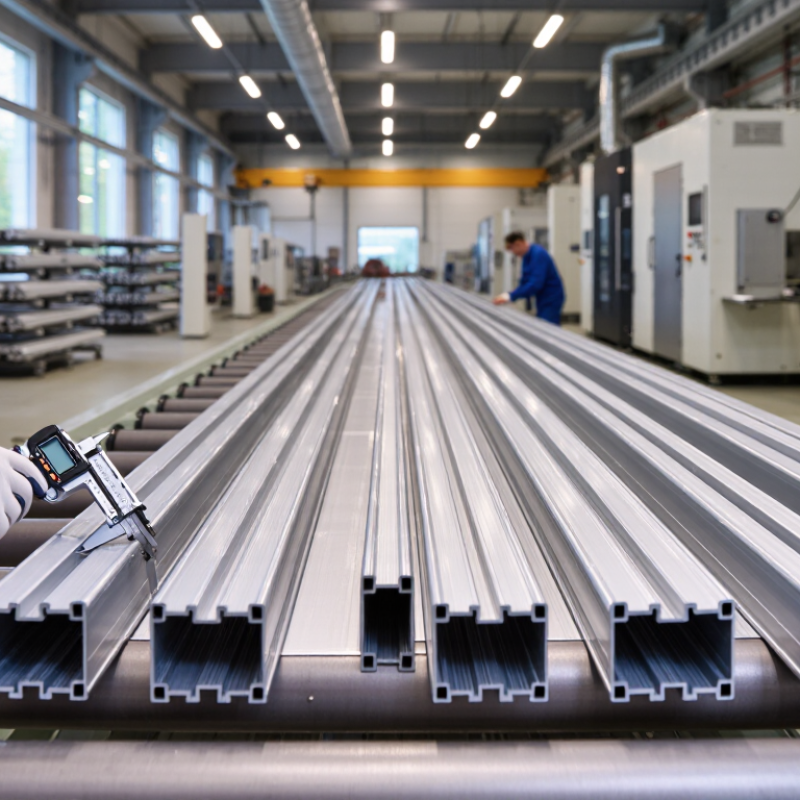
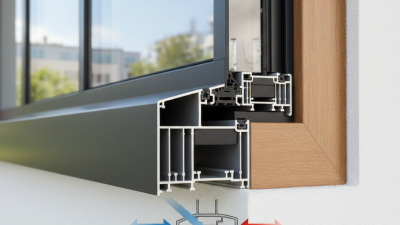
Thermal break aluminum extrusion is an aluminum framing system designed to reduce heat transfer through the frame. It separates the exterior and interior aluminum sections with a low-conductivity polyamide strip. During production, aluminum profiles are grooved, fitted with the strip, and mechanically crimped together. The finished section still looks metallic, but heat must cross a much less conductive path.
A cut section shows the principle clearly. Cold outdoor aluminum stops at the polyamide barrier. Interior aluminum remains warmer. This reduces condensation risk and improves the frame’s U-value, especially around window edges. The U.S. Department of Energy reports that windows can cause 25–30% of residential heating and cooling energy use. Better frames therefore matter. They do not solve every problem.
Glass still dominates much of the opening. Air leakage, installation gaps, drainage, and gasket quality also affect performance. The International Energy Agency reported that building operations represented about 30% of global final energy consumption in 2022. That figure gives thermal design real weight. However, supplier claims should be checked carefully. Ask for tested U-values, air-tightness results, polyamide dimensions, and standards such as ISO 10077-2. A thicker strip is not automatically better. Sometimes, the weakest detail is the corner joint. That deserves reflection.
Thermal break aluminum extrusion uses a low-conductivity polyamide or resin isolator between the interior and exterior aluminum sections. The table below compares anonymized supplier capability profiles using common industry specifications and performance ranges. Actual results depend on the complete window, door, or façade system and must be confirmed through project-specific testing.
| Capability Profile | Primary Applications | Common Aluminum Alloys | Thermal Break Construction | Typical Frame Depth | Thermal Performance Focus | Finishing and Quality Options | Best-Fit Buyer |
|---|---|---|---|---|---|---|---|
| Profile A: High-Performance Façade | Curtain walls, unitized façades, large commercial buildings, and high-rise projects. | 6063-T5 or 6063-T6 for architectural profiles; alloy selection varies by structural design. | Polyamide 66 reinforced with approximately 25% glass fiber; mechanically locked thermal barrier with drainage and pressure-equalization features. | Approximately 120–200 mm, depending on the façade system. | Designed for low whole-window U-values, reduced linear thermal bridging, and improved condensation resistance. | Architectural powder coating, anodizing, and multi-color or dual-color options; batch traceability commonly required. | Commercial façade contractors and specification-led projects. |
| Profile B: Energy-Efficient Window and Door | Residential windows, balcony doors, sliding doors, and low-rise commercial buildings. | 6063-T5 is widely used for extruded architectural sections; temper and wall thickness are selected for design loads. | PA66 GF25 strips commonly ranging from about 14.8 mm to 34 mm, with strip geometry selected for the required insulation level. | Approximately 60–100 mm. | Balanced thermal insulation, air tightness, water resistance, and sash-frame compatibility. | Powder coating to common architectural specifications, anodizing, wood-look finishes, and in-line dimensional inspection. | Window fabricators and residential developers. |
| Profile C: Premium Passive-Building System | Passive-house-oriented windows, net-zero buildings, cold-climate projects, and high-performance renovations. | 6063-series architectural aluminum, with reinforced sections where structural requirements demand it. | Wider polyamide barriers, insulated glazing interfaces, multiple chambers, and enhanced edge insulation details. | Approximately 80–120 mm. | Optimized for very low frame conductivity and reduced surface-temperature differences; whole-unit certification is essential. | Controlled thermal-break assembly, low-tolerance machining, documented material certificates, and project-specific performance testing. | Passive-building specialists and energy-performance consultants. |
| Profile D: Large-Opening Sliding System | Lift-and-slide doors, panoramic glazing, terrace doors, and premium residential openings. | 6063-T5 or higher-strength architectural grades where required by span, weight, or wind-load calculations. | Thermally separated multi-rail profiles with reinforced polyamide strips and insulated glass support zones. | Approximately 100–180 mm. | Focuses on frame stiffness, low air leakage, smooth operation, and thermal performance across large glazed areas. | Precision machining, corrosion-resistant hardware interfaces, powder coating, anodizing, and controlled assembly tolerances. | Luxury residential and hospitality projects. |
| Profile E: Coastal and High-Corrosion Environment | Marine climates, coastal housing, waterfront hotels, and industrial or humid environments. | Architectural 6063-series aluminum with finish selection based on exposure category and maintenance requirements. | Thermal barrier profiles designed to reduce metal continuity while maintaining sealed joints and drainage paths. | Approximately 60–150 mm. | Combines thermal separation with resistance to salt, moisture, galvanic contact, and coating degradation. | Pre-treatment and coating systems selected for corrosive environments; coating thickness and adhesion should be verified by test records. | Coastal contractors and building-envelope specialists. |
| Profile F: Custom Industrial and Mixed-Use | Special-purpose enclosures, industrial windows, acoustic partitions, and mixed-use developments. | 6063-series for formability and appearance; alternative aluminum grades may be specified for higher mechanical demands. | Custom thermal barriers, reinforced sections, or hybrid insulating components engineered around the required load and fabrication method. | Approximately 50–160 mm. | Prioritizes application-specific performance, manufacturability, dimensional stability, and integration with non-standard glazing. | Custom dies, prototype sampling, CNC processing, powder coating, anodizing, and inspection plans agreed before production. | OEMs, façade designers, and buyers with non-standard requirements. |