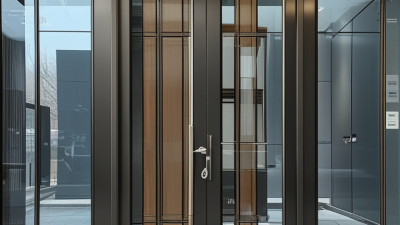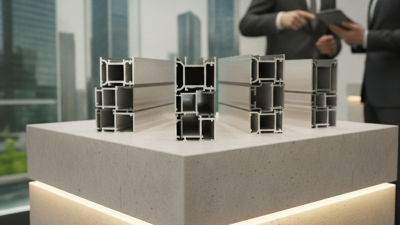
Choosing the best China Insulated Aluminium Door Profiles requires more than comparing prices and catalogue photos. A reliable decision begins with thermal performance, manufacturing consistency, and tested durability. These profiles usually combine aluminium strength with a polyamide thermal barrier. That barrier helps reduce heat transfer through the frame. Details matter.
As building-envelope researcher Dr. Stephen Selkowitz has stated, “Windows are the most complex and dynamic components in the building envelope.” His observation also applies to insulated doors. A door must manage heat, moisture, air movement, glass weight, hardware loads, and daily opening cycles. One weak component can reduce the value of the entire system.
This guide examines Chinese profile manufacturers through practical indicators. We will consider thermal-break width, aluminium alloy quality, wall thickness, gasket design, drainage channels, powder-coating performance, and fabrication support. We will also discuss U-values, air permeability, water tightness, and wind-load testing. These figures should come from traceable laboratory reports, not vague sales claims. Ask for samples. Inspect the corner joints. Check whether the polyamide strip remains firmly locked after assembly. Small gaps can become cold lines around a real doorway.
No profile is perfect. Even experienced buyers can focus too heavily on insulation and overlook installation quality. That is a weakness worth admitting. A premium frame performs poorly when the threshold is uneven or the seal is compressed incorrectly. China offers capable producers, but quality varies widely. The best Insulated Aluminium Door Profiles are selected through evidence, site requirements, and careful technical questions—not attractive brochures alone.
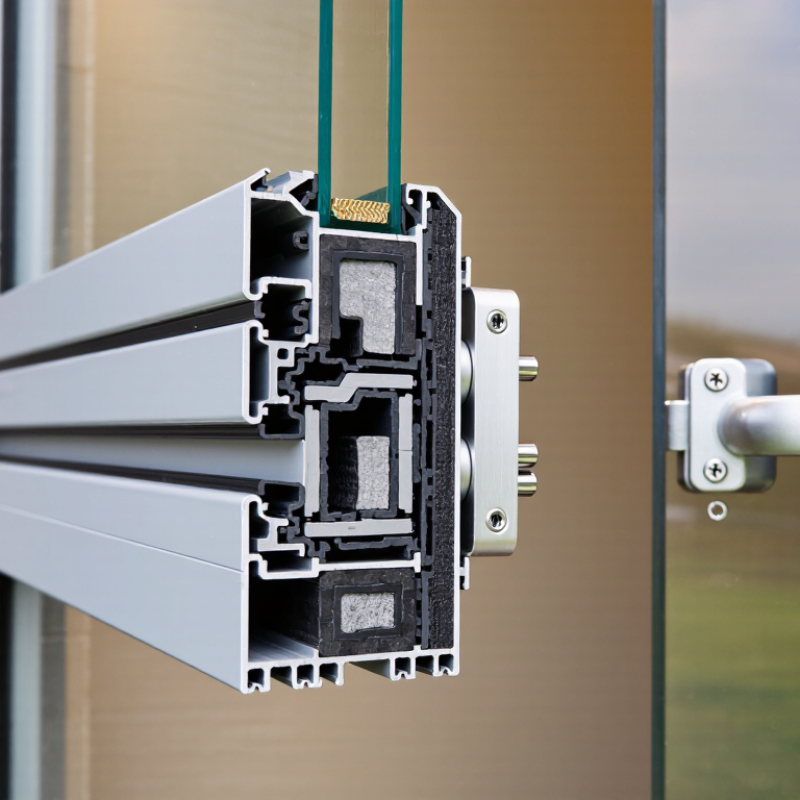
Insulated aluminium door profiles are engineered frames that reduce heat transfer through the doorway. They usually contain two aluminium sections joined by a low-conductivity polyamide thermal barrier. This barrier interrupts the metal’s natural heat path. The frame stays cooler.
Many profiles also include hollow chambers, compression gaskets, and channels for insulated glass. Together, these parts improve thermal performance, air sealing, and resistance to rain. A well-designed section can support large door panels without excessive frame movement. However, profile depth alone does not prove quality. Tested U-values, gasket design, and connection accuracy matter more.
For China-made insulated aluminium profiles, buyers should check alloy grade, thermal-break width, coating durability, and production tolerances. A wider barrier often helps, but it must suit the local climate and glass specification. Coastal projects need stronger corrosion protection. Cold regions need careful attention to corner joints and drainage holes. In practice, installation can weaken an excellent profile. Poorly aligned rollers, compressed seals, or unsealed screw channels may create drafts. Details matter.
I would request laboratory test reports and sample sections before approving large orders. Inspect the barrier for continuous bonding, not just a clean surface. No profile is perfect. Some suppliers present impressive thermal data from ideal laboratory assemblies, while real buildings perform differently. Site exposure, workmanship, and maintenance deserve equal attention. An informed choice balances insulation, structural strength, hardware compatibility, and long-term service needs.
What Are the Best China Insulated Aluminium Door Profiles?
Thermal break aluminium profiles reduce heat transfer through the door frame. A polyamide strip separates the inner and outer aluminium sections. This interrupts the metal’s continuous conduction path. The result is a lower frame U-value and a warmer interior surface.
The International Energy Agency reports that buildings consume about 30% of global final energy. They also produce roughly 26% of energy-related emissions. Better door profiles cannot solve this alone. However, they can reduce perimeter heat loss, especially in glazed entrances and balcony doors. In winter, a thermally improved frame feels less cold near the handle. It also lowers the risk of surface condensation.
Look beyond profile depth. Check the declared Uf value, thermal-break width, air-tightness class, and corner assembly method. EN ISO 10077-2 provides a recognized calculation route for frame thermal performance. In practical inspections, poorly crimped corners can weaken an otherwise efficient profile. Installation matters greatly. Gaps around the frame can waste the benefits of expensive insulation. This point is often underestimated.
A suitable China insulated aluminium profile should match the local climate, glass specification, drainage design, and door size. The lowest quoted U-value is not always the best choice. Testing, traceable data, and consistent production deserve more attention. Some project claims still rely on laboratory conditions. Real buildings are less forgiving.
| Profile configuration | Typical thermal-break width | Approx. frame Uf value | Typical complete-door Ud value* | Suitable glazing | Expected energy-efficiency benefit | Typical applications |
|---|---|---|---|---|---|---|
| Basic non-thermal aluminium profile | 0 mm | Approximately 5.0–7.0 W/m²·K | Approximately 3.0–5.0 W/m²·K | Single or basic double glazing | Limited insulation; higher heat transfer through the frame | Unconditioned spaces, interior partitions, mild climates |
| Standard thermal-break profile | 24–34 mm | Approximately 2.0–3.0 W/m²·K | Approximately 1.6–2.4 W/m²·K | Double insulating glass, typically low-E coated | Moderate reduction in conductive heat loss and surface condensation risk | Residential doors, apartments, offices, temperate climates |
| Enhanced thermal-break profile | 34–45 mm | Approximately 1.6–2.2 W/m²·K | Approximately 1.2–1.8 W/m²·K | Double or slim triple insulating glass | Improved insulation, warmer internal frame surfaces and lower heating or cooling demand | Energy-conscious homes, commercial buildings, mixed climates |
| High-performance thermal-break profile | 45–66 mm or more | Approximately 1.0–1.6 W/m²·K | Approximately 0.8–1.4 W/m²·K | Triple insulating glass with low-E coatings and inert-gas cavities | High resistance to heat flow and strong control of interior condensation | Cold climates, passive-house-oriented projects, high-performance façades |
| Thermal-break lift-and-slide profile | 34–56 mm | Approximately 1.5–2.5 W/m²·K | Approximately 1.0–1.8 W/m²·K | Large double or triple insulating glass units | Reduces heat transfer across large glazed openings while supporting smooth operation | Large balconies, terraces, villas, commercial entrances |
| Thermal-break entrance-door profile | 24–45 mm | Approximately 1.5–2.8 W/m²·K | Approximately 1.0–1.9 W/m²·K | Insulated panel, double glazing or triple glazing | Helps limit draught-related heat loss when combined with continuous seals and a well-insulated threshold | Main entrances, apartment buildings, hotels, low-energy homes |
What Are the Best China Insulated Aluminium Door Profiles?
Which Materials and Specifications Determine Profile Quality?
A reliable insulated aluminium door profile starts with the alloy. 6063-T5 or 6063-T6 aluminium offers clean extrusion lines, stable strength, and good corrosion resistance. Check the wall thickness carefully. Residential doors often use about 1.4 to 2.0 millimetres, while larger openings may require more. A thicker wall is not automatically better. Poor die design can still create weak corners and uneven surfaces.
The thermal break deserves close attention. PA66 reinforced with 25% glass fibre is widely used because it handles heat, moisture, and mechanical stress effectively. The polyamide strip should fit tightly inside the aluminium cavity, without visible gaps or loose movement. Profiles with multiple chambers can reduce heat transfer, but chamber shape matters more than chamber count. I have seen attractive sections perform poorly because their seals were badly installed.
EPDM gaskets should remain flexible in cold weather and resist ageing under sunlight. Properly designed profiles also support double or triple glazing, drainage channels, and adjustable hardware. Ask for air, water, and wind-load test results from an independent laboratory. Surface coating quality matters too; consistent colour, strong adhesion, and adequate film thickness help prevent early fading. Specifications can look impressive on paper. Site installation still decides much of the final performance.
Which Materials and Specifications Determine Profile Quality?
Typical material ranges shown in W/m·K. Actual values vary with alloy composition, glass-fiber content, density, temperature, and test method.
China-made insulated aluminium door profiles can compete strongly on cost, but specifications matter more than origin. Common 6063-T5 or 6063-T6 alloys offer good extrusion quality and corrosion resistance. However, alloy labels alone cannot prove durability. A reliable profile should show verified thermal-transmittance data, polyamide thermal-break width, wall thickness, and coating performance. Independent tests should follow EN 14351-1, ISO 10077-1, or equivalent national standards. Ask for air-permeability, water-tightness, and wind-load results. Factory photographs are not enough.
Cost advantages usually come from China’s large extrusion capacity, integrated supply chains, and tooling efficiency. The International Aluminium Institute reports that recycled aluminium requires about 5% of the energy used for primary aluminium production. This can support lower material costs, although recycled content must be verified. The U.S. Department of Energy also reports that low-emissivity glazing can reduce window heat loss by about 30–50%. That benefit depends on the complete door system, not the profile alone.
In practical comparisons, a Chinese profile may cost less initially while delivering similar performance after proper engineering and testing. Yet cheaper profiles may use thinner walls, narrower thermal breaks, or inconsistent insulation. That is where savings become questionable. I have found that installation quality often changes real performance more than catalogue values. A small corner gap can defeat an excellent frame. Buyers should compare tested whole-door U-values, warranty terms, batch consistency, and replacement support, rather than comparing aluminium prices alone.
What Are the Best China Insulated Aluminium Door Profiles?
When selecting a Chinese profile supplier, verify performance before comparing prices. European Commission data shows buildings consume about 40% of Europe’s energy. A poorly designed thermal break can increase heat loss around the door perimeter.
Request certified test reports, not only product brochures. Check thermal transmittance under EN ISO 10077-2, air tightness under EN 12207, and water resistance under EN 12208. Reports should identify the exact profile series, dimensions, glass configuration, and test laboratory. An ISO 9001 certificate shows process control, but it does not prove strong thermal performance.
Inspect the sample physically. Look for continuous polyamide strips, clean crimping, stable corner joints, and consistent coating thickness. Ask for extrusion tolerances and batch traceability. I once focused too heavily on wall thickness. That was incomplete. Seal design and assembly accuracy often influence real performance more than aluminium weight alone.
Supplier sustainability claims also need evidence. The International Aluminium Institute reports that recycled aluminium requires roughly 5% of the energy used for primary aluminium production. Ask for recycled-content records, alloy certificates, and independent environmental data. Check whether the supplier can repeat the same colour and profile dimensions across several batches. A low first quotation may hide tooling charges, packaging damage, or weak after-sales support. Request a pilot order and measure received profiles before approving full production.