Leave Your Message

China Top 10 Insulated Aluminium Window Profile Suppliers?

Choosing a supplier for Insulated Aluminium Window Profiles is not just a price comparison. Profile design, thermal-break material, finish quality, and fabrication support all affect how a finished window performs. A sample may look smooth under showroom lights, yet reveal uneven coating or loose corner joints during closer inspection. Small details matter.

This guide introduces ten suppliers for buyers comparing product ranges and manufacturing capabilities. It considers practical factors such as available profile systems, customization options, quality documentation, export experience, and responsiveness to technical questions. These points can help narrow a shortlist, but they do not replace checking samples, drawings, and current certifications directly with each company. Supplier information can change. So can product specifications.

The “top ten” label should be treated as a starting point, not a universal verdict. Project needs differ by climate, building design, fabrication method, and budget. A supplier suited to a large commercial project may not fit a small residential order. That distinction is easy to overlook. Some comparisons also rely on incomplete public information, so readers should verify claims before making a purchasing decision. Use the profiles in this overview to ask more precise questions and identify which suppliers merit further review.

China Top 10 Insulated Aluminium Window Profile Suppliers?

What Defines an Insulated Aluminium Window Profile?

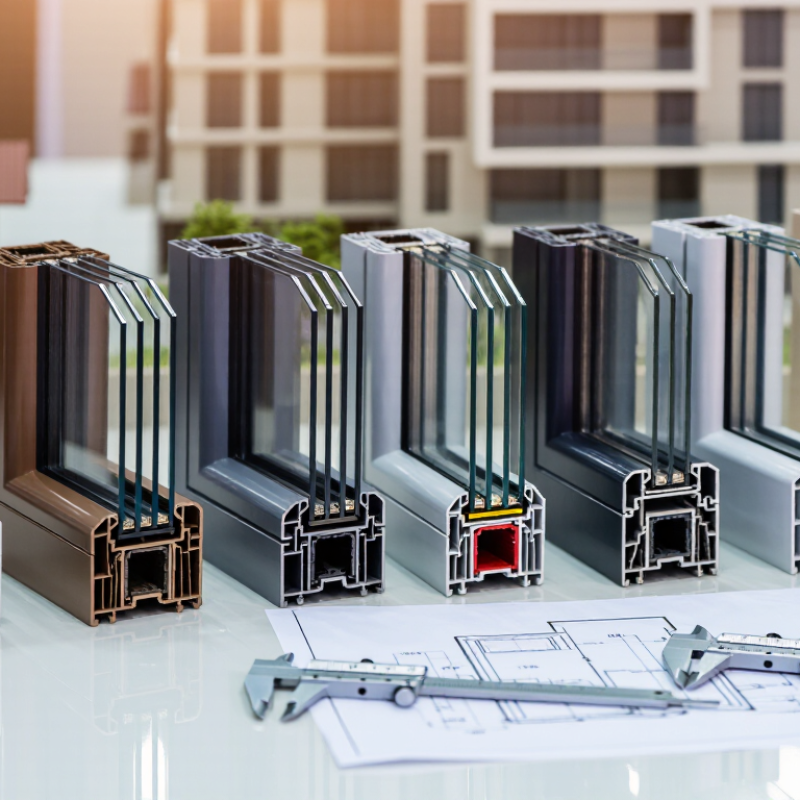
An insulated aluminium window profile is a frame or sash system designed to slow heat transfer between the outdoor and indoor surfaces. Its key feature is a thermal break, commonly a low-conductivity strip joining the inner and outer aluminium sections. This separation reduces the direct path for heat to travel through the metal. The profile may also include chambers that hold still air, along with seals that limit drafts and moisture entry.

Details matter. A narrow thermal break, poorly fitted gasket, or badly aligned sash can weaken the performance of an otherwise substantial frame. In practical checks, look at the strip’s position and continuity, the quality of corner joints, and how the glazing sits within the sash. The glass, installation, and frame work as one assembly. A profile alone cannot guarantee a warm room. Not by itself.

“Insulated” is not a single performance level. Ask for verified thermal data for the complete window configuration, not just the aluminium section. Compare the stated test conditions, since glazing size and frame proportions can affect results. I have seen specifications that look impressive on paper but leave little explanation of real assembly details. That deserves a closer look. Comfort also depends on climate, orientation, and installation quality, so the best profile is not automatically the thickest one.

How China’s Supplier Market Is Structured

China Top 10 Insulated Aluminium Window Profile Suppliers?

How China’s Supplier Market Is Structured

China’s supplier market is a chain, not a single factory category. It includes aluminium billet producers, extrusion mills, thermal-break profile processors, window fabricators, and export traders. Some companies control several stages; others specialize in one. That difference affects lead times, customization, and who handles quality issues. China’s National Bureau of Statistics reported 41.59 million tonnes of primary aluminium production in 2023. This is useful context for the industrial base, but it is not a measure of window-profile output or supplier market share. Public rankings rarely disclose comparable, audited data for insulated profiles.

For buyers, the key distinction is between supplying profiles and supplying finished windows. A profile processor may cut thermal-break slots and assemble polyamide strips, while a fabricator also builds frames, installs hardware, and tests complete units. Ask which production steps happen in-house. Request section drawings, alloy and temper specifications, coating details, and batch-level inspection records. A polished sample is helpful, but it cannot show how a supplier manages consistency across a full container.

Tips: Compare quotations on the same profile series, finish, wall thickness, and test scope. Confirm whether thermal performance figures apply to the profile alone or the complete window. Small detail. A vague answer is a reason to pause.

China Top 10 Insulated Aluminium Window Profile Suppliers? - How China’s Supplier Market Is Structured
No. Supplier-market segment Typical footprint Common supply scope Typical strengths Best suited to What buyers should verify
1 Integrated aluminium extruders Found across major aluminium manufacturing regions, including parts of South, East, and North China. Aluminium billet processing, profile extrusion, finishing, and—in some cases—thermal-break assembly. Broader control of production steps and capacity to support repeat orders across multiple profile series. Buyers seeking a consolidated supply chain for established, higher-volume specifications. Confirm which processes are performed in-house, production capacity, tooling ownership, and traceability by batch.
2 Thermal-break profile specialists Located in established construction-material supply chains and near extrusion or window-manufacturing clusters. Aluminium sections assembled with insulating strips, commonly polyamide, for thermally broken window systems. Focused experience with strip insertion, profile matching, and thermal-break system details. Projects where thermal performance and compatibility between frame components are priorities. Request the exact profile cross-sections, strip material specifications, assembly process details, and test evidence for the intended window configuration.
3 Architectural system suppliers Often serve domestic and export markets from regional production and design centers. Coordinated profile families, accessories, drawings, and technical guidance for window and door systems. System-level support can help reduce mismatches between frames, sashes, gaskets, and hardware. Window fabricators and project buyers who need a compatible series rather than isolated profile shapes. Check series documentation, accessory availability, drawing revisions, installation guidance, and whether performance claims apply to the complete window assembly.
4 Export-oriented profile manufacturers Commonly connected to coastal export logistics and established international trading channels. Custom or standard profiles, export packing, order coordination, and documentation for overseas shipments. Familiarity with export packaging, shipping schedules, and buyer-specific documentation requirements. Importers and fabricators sourcing profiles for markets outside China. Confirm export experience for the destination market, packing specifications, lead-time assumptions, and responsibility for freight and customs documents.
5 Regional extrusion mills Present in several provincial manufacturing clusters, including areas with established aluminium-processing industries. Extruded aluminium profiles in standard or customer-designed cross-sections; finishing may be in-house or outsourced. Potential flexibility in profile design, production scheduling, and regional sourcing. Buyers with defined drawings who need a direct extrusion source. Review die charges and ownership, minimum order quantities, dimensional tolerances, alloy and temper documentation, and finishing subcontractors.
6 Surface-finishing-focused suppliers Often located near extrusion plants or in industrial areas with established coating and finishing services. Profiles with finishes such as powder coating, anodizing, or other specified surface treatments. Experience managing colour consistency, surface appearance, and finishing options. Projects with defined appearance requirements or multiple finish selections. Approve physical samples; confirm coating or anodizing specifications, inspection criteria, colour tolerances, and protection during transport.
7 Custom-die and small-batch suppliers Typically operate within broader extrusion and toolmaking networks. Prototype runs, non-standard sections, replacement profiles, and lower-volume custom orders. Can be more accommodating when a buyer needs a specialized cross-section or a trial production run. Product developers, renovation suppliers, and buyers validating a new profile design. Clarify die design approval, sample and trial procedures, dimensional inspection, die storage, and repeat-order pricing.
8 Window-project package suppliers Usually work through networks of profile producers, window fabricators, and project contractors. Profiles and related components coordinated for a specific building project or window schedule. Can simplify sourcing when multiple compatible components and delivery phases are required. Contractors and project purchasers managing coordinated, time-sensitive procurement. Confirm bill-of-material responsibility, component compatibility, delivery phasing, substitution approval, and who handles performance testing.
9 OEM and private-label suppliers Operate across manufacturing regions and may produce to a buyer’s drawings or product specifications. Buyer-specified profile designs, packaging, labels, and repeat production for an external product range. Supports buyers building their own product offering without relying on a supplier’s public-facing brand. Distributors and manufacturers with established specifications and ongoing demand. Set written controls for drawings, tooling rights, confidentiality, change approval, batch records, and packaging artwork.
10 Trading and export consolidators Often based near logistics hubs and connected to multiple factories or component suppliers. Sourcing coordination, consolidated orders, communication, inspection coordination, and export administration. Can make multi-supplier procurement easier, particularly for buyers placing smaller or mixed orders. Importers who value a single coordination point or need to combine product categories. Identify the actual factory for each item, clarify inspection access, verify technical documents at source, and define responsibility for defects and claims.
Reading note: These are representative supplier-market segments, not a ranked list of named companies. Categories can overlap. Thermal performance depends on the complete window design and its tested configuration, not on the aluminium profile alone.

Criteria for Evaluating Leading Chinese Suppliers

Evaluating China’s leading insulated aluminium window profile suppliers takes more than comparing catalogue U-values. UNEP and GlobalABC’s 2024 Global Status Report for Buildings and Construction estimates that buildings use 32% of global energy and generate 34% of energy- and process-related CO₂ emissions. This makes thermal performance important, but a profile is only one part of a finished window. Ask for independently verified whole-window results covering the frame, sash, glazing, and hardware. ISO 10077-2 provides a method for calculating frame thermal transmittance; request the test conditions and calculation boundaries, not just a headline figure. Numbers need context.

Compare thermal-break width, material specifications, dimensional tolerances, and batch traceability. Request records for air leakage, water penetration, and wind resistance on complete window systems. These tests reveal more than a profile sample alone. Small details matter. Check whether production samples match the drawings and whether inspection reports identify the tested batch. A neat showroom corner can hide inconsistent machining or weak quality control. I would also question unusually low prices and unusually confident claims; neither proves poor quality, but both deserve documented evidence. Ask suppliers how they manage tooling changes, surface-finish checks, and rejected batches, then compare their answers with factory records and independent test reports.

Profiles of Ten Notable Insulated Profile Suppliers

China’s insulated aluminium window-profile market includes suppliers with very different strengths. These ten profiles describe useful ways to compare them, rather than a fixed ranking of named companies.

A high-volume extruder suits standard sizes and repeat orders. A thermal-break specialist focuses on polyamide strips and tight assembly tolerances. A custom-die supplier can develop unusual section shapes, though tooling may add cost and time. An export-oriented producer often coordinates packing and shipping for overseas projects. A testing-focused supplier can provide reports on heat transfer, air leakage, or water resistance. Check that reports match the profile system you plan to buy.

A renovation specialist may offer narrow frames that fit older openings. A finishing-focused factory handles color consistency and surface preparation; inspect a physical sample in daylight. An architectural-project supplier adapts profiles to drawings and site requirements. A flexible mid-sized producer may accept smaller batches, but capacity can vary. Details matter. A documentation-led supplier keeps specifications, inspection records, and batch information organized. Not always exciting, but useful when questions arise.

Before choosing, compare alloy details, wall thickness, thermal-break design, and machining quality. Ask for sample corners and check joints, drainage paths, and finish around cut edges. One weakness in this comparison is that supplier strengths can overlap. Verify current production capabilities directly.

China Insulated Aluminium Window Supplier Benchmark: Thermal Insulation Grades

Thermal insulation grade limits under China’s GB/T 8478-2020 window standard. The bars show the maximum heat transfer coefficient (K, W/m²·K) at the upper boundary of Grades 2–10; lower values indicate better insulation. These are standard benchmarks, not supplier-specific test results.

How to Compare Suppliers and Verify Product Quality

China Top 10 Insulated Aluminium Window Profile Suppliers?

How to Compare Suppliers and Verify Product Quality

A supplier comparison should go beyond price and catalogue photos. The IEA’s 2024 Global Status Report for Buildings and Construction attributes 32% of global energy demand and 34% of energy-related emissions to buildings and construction. This makes verified window performance worth checking. Ask each supplier for profile drawings, alloy and temper details, thermal-break material specifications, and coating-thickness records. Numbers matter. Confirm that sample dimensions match the quotation, especially around corner joints and drainage channels.

Request test reports for complete window systems, not just isolated aluminium profiles. Look for air-permeability, watertightness, and wind-load results under EN 12207, EN 12208, and EN 12210, respectively. Check the tested size, configuration, and laboratory details; results from a small fixed window may not represent a large opening sash. A polished brochure is not proof. I would also compare batch traceability and production inspection records, though paperwork can still miss defects. Physical samples help reveal uneven coating, loose thermal breaks, or rough machining.

Tips: Ask for recent reports from an accredited laboratory and verify the report number with the issuer. Inspect a cut section, measure key dimensions, and compare it with the approved drawing before ordering.