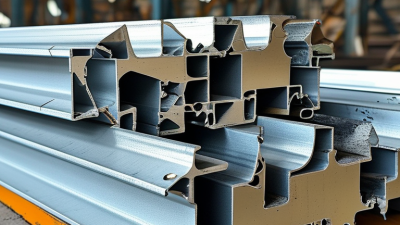
Leave Your Message
Choosing Broken Bridge Aluminum Profiles is not simply a matter of selecting the widest thermal barrier. The right decision depends on climate, window size, glass specification, installation quality, and long-term maintenance. The U.S. Department of Energy reports that windows can cause 25% to 30% of residential heating and cooling energy use. This figure explains why profile performance deserves careful attention, especially in buildings with large glazed areas.
The International Energy Agency’s Buildings 2023 report states that buildings account for about 30% of global final energy consumption. Therefore, a well-designed thermal-break system can support broader energy-efficiency goals. Dr. Joseph Lstiburek, a respected building-science expert, offers a useful principle: “A building enclosure is a system, not a collection of parts.” His statement applies directly to Broken Bridge Aluminum Profiles. A high-quality profile cannot compensate for weak seals, poor glass, or careless installation.
Look beyond marketing claims. Check the declared U-value, polyamide strip width, air-tightness rating, water resistance, and structural load capacity. Ask whether the profile has been tested under conditions resembling the project site. Coastal buildings may require stronger corrosion protection. Cold regions need careful attention to condensation control. Large doors need accurate hardware and reinforcement.
I may be tempted to choose the lowest quoted price. That can be a costly mistake. Still, thermal performance alone is not enough. Compare certified test data, system compatibility, supplier experience, and after-sales support before making the final choice.
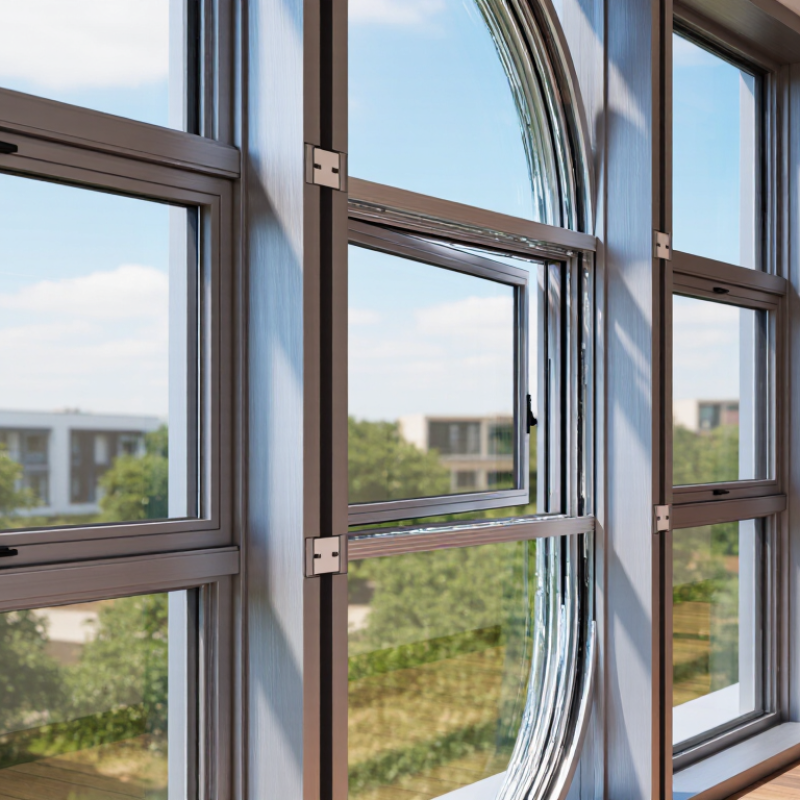
How to Choose Broken Bridge Aluminum Profiles?
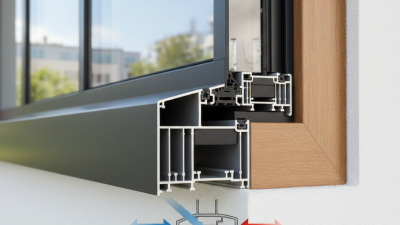
Broken bridge aluminum profiles, also called thermally broken profiles, use an insulating strip between the inner and outer aluminum sections. This strip reduces heat transfer through the frame. Polyamide is commonly used because it offers good strength and dimensional stability. During selection, check the strip width, cavity design, and connection strength. A wider barrier is not always better. Its performance depends on the complete frame system.
The International Energy Agency reported in Buildings 2023 that buildings consume about 30% of global final energy. The U.S. Department of Energy also notes that windows can represent 25% to 30% of household heating and cooling energy use. These figures make thermal performance important. Check the tested U-factor, air leakage, water resistance, and solar heat gain coefficient. Lower U-factor values usually indicate better insulation.
Look at the details.
Reliable suppliers should provide laboratory test reports, material certificates, and installation guidelines. Examine corner joints, drainage channels, sealing gaskets, and glass compatibility. Poor assembly can weaken a strong profile. On-site experience shows that incorrect drainage often causes more trouble than the aluminum itself. I would also check corrosion resistance in coastal areas and allow for thermal expansion in large frames. Data matters, but installation conditions can change the result. A profile that performs well in a laboratory may disappoint when seals are cut carelessly or the barrier is damaged during fabrication.
| Selection Dimension | What to Check | Typical Technical Guidance | Why It Matters | Recommended Choice |
|---|---|---|---|---|
| Thermal Break Material | Type, width, continuity, and mechanical connection of the insulating strip between the interior and exterior aluminum sections. | Polyamide 6.6 reinforced with approximately 25% glass fiber is widely used for thermally broken systems. Common thermal-break widths are about 14–34 mm, depending on the system. | The thermal break reduces direct heat transfer through the aluminum frame and helps limit interior-surface condensation. | Choose a continuous, properly locked polyamide thermal break that matches the required thermal performance. |
| Profile Wall Thickness | Wall thickness of the main frame, sash, mullion, or transom profile. | Many building systems use wall thicknesses around 1.4–2.0 mm. Heavier profiles may be required for large openings, high wind loads, or security applications. | A thicker wall generally improves stiffness, fastener holding, and resistance to deformation, although engineering calculations are still necessary. | Select the thickness according to span, sash weight, wind pressure, opening size, and applicable building codes rather than choosing by thickness alone. |
| Overall Profile Depth | Depth of the frame or sash from the interior face to the exterior face. | Common window and door systems often range from approximately 55–100 mm, while high-performance or large-span systems may be deeper. | Greater depth can provide more space for insulation, hardware, glazing, and structural reinforcement. | Use a deeper profile for large glass areas, tall doors, higher wind exposure, or demanding thermal requirements. |
| Thermal Performance | Whole-window U-value, frame U-value, glazing specification, spacer type, and air leakage performance. | Thermal performance is normally assessed using U-values in W/m²·K. Lower values indicate better insulation. The final result depends on the complete window assembly, not the aluminum profile alone. | A thermally broken frame can reduce heat loss, but glass, edge spacers, seals, and installation quality strongly influence the finished product. | Compare complete tested or calculated window-system performance instead of relying only on the stated frame material. |
| Air Tightness | Number and quality of gaskets, corner joints, drainage design, and compression of the seals. | High-performance systems commonly use two or three sealing levels, often including an internal continuous gasket and a central sealing zone. | Good air tightness reduces drafts, dust entry, outdoor noise transmission, and uncontrolled heat loss. | Prefer systems with continuous EPDM or equivalent durable gaskets, well-designed corners, and verified air-leakage test results. |
| Water Tightness | Drainage channels, weep holes, glazing rebates, gasket design, and pressure-equalization details. | Water performance is expressed by a tested pressure classification or equivalent project requirement. Drainage paths must remain clear after installation. | Effective drainage prevents rainwater from reaching interior finishes, insulation, or hardware. | Choose a profile system with independent drainage, correctly positioned weep holes, and test data suitable for the building exposure. |
| Structural Strength | Profile moment of inertia, alloy condition, reinforcement options, connection method, and maximum unsupported span. | 6063 aluminum alloy is widely used for architectural extrusions; temper and structural design must be confirmed for the intended load. Large openings may require steel or aluminum reinforcement. | Strength affects deflection, sash operation, glass safety, and long-term serviceability. | Have the frame size and loads checked by a qualified designer, especially for curtain walls, tall doors, and exposed elevations. |
| Glazing Compatibility | Permitted glass thickness, glazing bead dimensions, setting-block position, and compatibility with insulated or laminated glass. | Systems may support single, double, or triple glazing. The exact glass thickness and weight must match the glazing pocket and hardware capacity. | Correct glazing compatibility supports thermal, acoustic, safety, and structural requirements. | Choose the profile only after confirming the required glass build-up, including coatings, spacers, laminates, and sealants. |
| Hardware Compatibility | Hardware groove dimensions, hinge capacity, locking points, handle position, and drainage clearance. | Hardware must be designed for the selected system and rated for the sash weight, opening type, and operating frequency. | Incompatible hardware can cause poor compression, difficult operation, premature wear, or security weaknesses. | Confirm hardware compatibility before ordering profiles, particularly for tilt-and-turn windows, lift-and-slide doors, and heavy entrance doors. |
| Acoustic Performance | Frame sealing, glass composition, gasket continuity, installation joints, and surrounding wall construction. | Acoustic results are reported as tested sound-reduction ratings or equivalent standards. Laminated acoustic glass often has a greater effect than profile changes alone. | Noise reduction depends on the weakest part of the complete window or door assembly. | Use a well-sealed thermally broken system with suitable laminated or insulating glass for traffic, railway, or urban-noise applications. |
| Surface Finish | Powder coating, anodizing, or other finish; coating thickness; color uniformity; and pretreatment quality. | Powder-coated finishes are commonly specified using recognized architectural coating standards. Anodized finishes are normally specified by film thickness and appearance requirements. | A suitable finish improves corrosion resistance, appearance, and resistance to weathering and ultraviolet exposure. | Match the finish to the environment, including coastal salt exposure, industrial pollution, humidity, and cleaning requirements. |
| Corrosion Resistance | Aluminum alloy, pretreatment, coating system, fasteners, drainage, and contact with dissimilar metals. | Coastal or industrial locations may require enhanced pretreatment, marine-grade finishing specifications, and corrosion-resistant stainless-steel accessories. | Corrosion can damage finishes, fasteners, drainage paths, and long-term weather performance. | Specify the environmental exposure class and ensure that profiles, hardware, sealants, and fasteners are mutually compatible. |
| Fabrication Accuracy | Cutting tolerances, corner crimping or joining, thermal-break alignment, gasket installation, and surface protection during assembly. | Accurate fabrication should follow the system manufacturer’s processing instructions and project tolerances. | Even a high-quality profile can perform poorly if corners are misaligned, seals are stretched, or drainage is blocked. | Choose a system supported by clear fabrication details, quality-control procedures, and trained installers. |
| Compliance and Testing | Applicable standards, product test reports, thermal calculations, structural calculations, and installation requirements. | Depending on the location, relevant requirements may cover air permeability, watertightness, wind resistance, thermal transmittance, safety glazing, and fire performance. | Testing verifies that the complete assembly performs as designed under defined conditions. | Request current, system-specific documentation rather than general claims about aluminum or thermal-break technology. |
| Project and Climate Suitability | Local temperature range, solar exposure, rainfall, wind pressure, humidity, altitude, and building orientation. | A profile suitable for a mild inland climate may not be adequate for a coastal, high-wind, cold, or high-solar-gain location. | Climate and exposure determine the required thermal break, glazing, seals, finish, drainage, and structural capacity. | Start with project-specific performance requirements, then select the profile series and accessories that satisfy them. |