Leave Your Message

Why Choose Aluminium Scaffold Tube for Global Projects?

Global construction projects demand materials that are light, dependable, and practical across changing site conditions. Aluminium Scaffold Tube can support these needs with a strong strength-to-weight balance and convenient handling. Its lower weight may reduce carrying effort during assembly, relocation, and dismantling. That matters on remote sites. It can also help teams manage transport space and lifting requirements more efficiently. However, material selection should never rely on weight alone. Tube diameter, wall thickness, connection design, load demands, and site exposure all influence safe performance.

From practical project planning, Aluminium Scaffold Tube is valuable when crews need repeatable installation and controlled logistics. Smooth, corrosion-resistant surfaces can support longer service in suitable environments, especially when storage and inspection are managed properly. Experienced contractors still check joints, braces, platforms, and base conditions before use. They also confirm compatibility with the selected scaffold system. Regional standards and engineering requirements differ, so qualified professionals must review calculations and supplier documentation. A reliable product is only one part of a reliable access system.

It is not a perfect answer.

Aluminium may cost more than some alternatives, and careless handling can cause dents or surface damage. This point is easy to overlook. Poor storage, overloaded platforms, or unsuitable couplers can undermine an otherwise sound design. The most responsible approach combines tested components, trained workers, documented inspections, and realistic project planning. This article examines why global teams choose Aluminium Scaffold Tube, while also questioning where its advantages may be limited. That balanced view helps buyers make informed decisions instead of following a simple material trend.
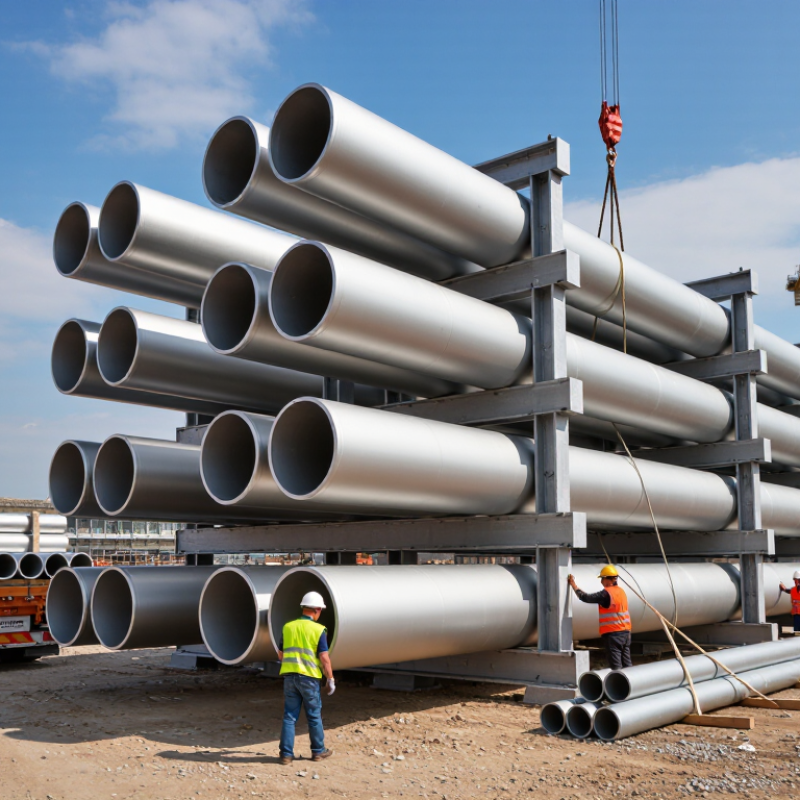
Why Choose Aluminium Scaffold Tube for Global Projects?

What Is Aluminium Scaffold Tube?

Aluminium scaffold tube is a hollow, round section made from a structural aluminium alloy. It forms the framework for temporary platforms, access towers, handrails, and support structures. The tube connects with compatible couplers, clamps, or specialised fittings.

Unlike steel, aluminium usually offers easier handling because it weighs less. Workers can carry sections across a busy site with reduced lifting effort. It also resists ordinary atmospheric corrosion, which helps on coastal, humid, and frequently relocated projects. That advantage is practical, not absolute. Salt deposits, chemicals, and poor storage can still damage surfaces.

Tube alone is not a scaffold.

A safe system depends on outside diameter, wall thickness, alloy condition, connection quality, and calculated loading. Engineers should check bending, buckling, platform loads, wind exposure, and foundation stability. Local regulations and project specifications must control the final design. Global work becomes complicated when one site follows different dimensional or safety requirements from another. Confirming measurements before shipment prevents costly fitting problems.

Field inspections often find small issues, such as damaged ends, loose couplers, or mixed tube sizes. These details matter. A lighter component may improve productivity, yet it can be less forgiving when overloaded or poorly braced. Aluminium scaffold tube is therefore best viewed as one engineered part of a complete access system, not a universal substitute for every scaffold application.
How Aluminium Scaffold Tube Is Manufactured and Designed

Why Choose Aluminium Scaffold Tube for Global Projects?

Aluminium scaffold tube starts with carefully selected alloy billets. Manufacturers heat the billets before pressing them through a shaped die. This extrusion process creates a consistent circular profile. The tube may then receive heat treatment to improve strength and stability. Precision saws cut each length to the required dimension. Clean edges matter. Rough cuts can damage connectors or complicate assembly.

Designers consider more than weight reduction. They study wall thickness, tube diameter, joint compatibility, bending resistance, and expected working loads. A lighter tube can reduce handling effort on busy construction sites. It can also lower transport demands between regions. However, aluminium behaves differently from steel under stress. Engineers must verify deflection, connections, and temporary support conditions for every project.

Surface inspection usually checks straightness, dents, scratches, and dimensional accuracy. Some projects also require alloy verification and documented quality testing. In coastal or humid environments, designers assess corrosion exposure and storage practices. Moisture trapped between tubes can create avoidable problems. Experience shows that manufacturing consistency supports safer installation, but it cannot replace competent site inspection. No design is perfect. Field conditions often reveal assumptions that drawings missed. Feedback from installers should influence later tube profiles, packaging, and connector choices.

Why Choose Aluminium Scaffold Tube for Global Projects? - How Aluminium Scaffold Tube Is Manufactured and Designed

Representative material, manufacturing, performance, and design data for aluminium scaffold tubes

Data Dimension Typical Value or Range How It Supports Global Project Requirements
Common Aluminium Alloy 6061-T6 or 6082-T6 Heat-treatable structural alloys that provide a practical balance of strength, weldability, corrosion resistance, and availability in international supply chains.
Typical Outside Diameter 48.3 mm A widely used scaffold-tube outside diameter that supports compatibility with many tube-and-fitting and modular scaffold systems, subject to local system approval.
Typical Wall Thickness 4.0–4.5 mm The selected wall thickness affects bending resistance, local buckling capacity, connection performance, and overall tube weight.
Material Density Approximately 2.70 g/cm³ Aluminium is substantially lighter than carbon steel, reducing manual handling effort, transport loads, and temporary-works installation demands.
Approximate Linear Mass About 1.5–1.7 kg/m for 48.3 mm × 4.0–4.5 mm tube Lower mass can improve logistics efficiency, although the final system weight also depends on fittings, decks, braces, platforms, and accessories.
Typical 0.2% Proof Strength Approximately 240–250 MPa for common T6 tempers Provides a useful structural-strength basis, but allowable loads must be calculated using the actual alloy certificate, section properties, connection design, and applicable safety factors.
Elastic Modulus Approximately 69 GPa Aluminium is less stiff than steel, so deflection, vibration, span length, and bracing requirements require careful engineering review.
Thermal Expansion Coefficient Approximately 23–24 µm/m·K Temperature movement is higher than for steel and should be considered in long runs, enclosed structures, temporary roofs, façade access systems, and restrained connections.
Manufacturing Method Direct extrusion through a precision die Extrusion produces a continuous hollow profile with controlled outside diameter, wall thickness, surface finish, and repeatable cross-sectional geometry.
Billet Preparation Cutting and controlled heating of aluminium billets Correct billet temperature and cleanliness help reduce surface defects, dimensional variation, and internal discontinuities during extrusion.
Post-Extrusion Treatment Quenching, artificial ageing, straightening, and cutting Heat treatment develops the specified T6 temper, while straightening and precision cutting prepare tubes for reliable assembly and dimensional control.
Surface Protection Natural oxide film; optional anodizing or coating Aluminium naturally forms a protective oxide layer. Additional finishes may be selected for appearance, wear resistance, identification, or more demanding atmospheric conditions.
Corrosion Performance Generally good in normal atmospheric environments Aluminium can be suitable for humid, coastal, and outdoor applications, but contact with incompatible metals, chlorides, trapped moisture, and chemical exposure must be assessed.
Connection Design Tube-and-fitting, sleeve, clamp, or proprietary modular connection Connection capacity may govern the system. Design checks should include slip resistance, local tube deformation, bolt forces, eccentricity, and compatibility between aluminium and fitting materials.
Structural Design Checks Compression, tension, bending, buckling, deflection, and stability Global projects require project-specific calculations covering bracing, tie patterns, base conditions, wind actions, live loads, imposed loads, and accidental actions where relevant.
Dimensional Tolerances Specified by the applicable product or extrusion standard Controlled diameter, wall thickness, straightness, and cut length are important for fitting engagement, system geometry, and repeatable erection.
Quality Verification Dimensional inspection, visual inspection, alloy verification, and mechanical testing Inspection records and material certificates help demonstrate conformity and support traceability across international procurement and construction teams.
Recyclability Aluminium is widely recyclable without losing its basic material properties Long service life and established recycling routes can support circular-material objectives, subject to collection, alloy separation, and local recycling infrastructure.
Standards and Compliance Must be selected according to the project jurisdiction and scaffold system Relevant requirements may include aluminium product standards, temporary-works rules, scaffold design standards, workplace regulations, and project-specific engineering specifications.

Engineering note: The values shown are representative ranges for commonly used aluminium structural tube configurations. They are not a substitute for certified material data, manufacturer tolerances, connection test results, or project-specific scaffold calculations.

Key Benefits for International Construction Projects

Aluminium scaffold tube suits international construction projects where transport, handling, and changing site conditions matter. It weighs far less than comparable steel tube, so crews can move bundles through narrow access routes with less lifting strain. A lighter load also reduces shipping volume and may simplify delivery to remote locations. Every kilogram counts.

Aluminium naturally resists rust, which helps on coastal sites, humid climates, and projects with frequent rain. Its reusable surface can remain serviceable when teams clean, inspect, and store tubes correctly. Smooth tube sections also support quick assembly during maintenance, industrial, and civil works. However, lightness does not mean unlimited strength. Aluminium has lower stiffness than steel, so engineers must verify spans, bracing, connection capacity, and working loads for each arrangement.

International projects need consistent inspection practices across different crews. Technicians should check dents, bends, worn fittings, and damaged ends before installation. Clear tagging can reduce confusion when materials move between work zones. Local regulations and project specifications still control the final design, even when the tube appears familiar. A rushed substitution may create alignment problems or unexpected movement. That detail is easy to miss. Practical training, documented load calculations, and independent review make the system more dependable. The material offers real advantages, but poor storage, careless handling, or weak planning can quickly reduce them.

Why Choose Aluminium Scaffold Tube for Global Projects?

A representative 6 m scaffold tube with a 48.3 mm outside diameter and 4.0 mm wall thickness weighs approximately 9.0 kg when made from aluminium alloy, compared with 26.2 kg for carbon steel. The lower theoretical weight can simplify manual handling, shipping, and assembly across international construction projects.

Calculation basis: tube mass = cross-sectional area × length × material density. Aluminium density: approximately 2,700 kg/m³; carbon steel density: approximately 7,850 kg/m³. Actual product weight varies by alloy, manufacturing tolerance, coatings, and wall thickness.

Safety Standards, Load Capacity, and Durability

Aluminium scaffold tube suits global projects when safety is designed into every connection. OSHA 29 CFR 1926.451 requires scaffolds to support their own weight and at least four times the maximum intended load. That margin is not permission to guess. Engineers must verify tube diameter, wall thickness, couplers, spans, bracing, and foundation conditions.

Load capacity depends on the complete system. EN 12811-1 defines scaffold service-load classes from 0.75 to 6.0 kN/m². A lightweight aluminium tube may reduce handling strain, but it cannot replace structural calculations. Wind, uneven loading, wet platforms, and moving materials can change the real forces. Small details matter. A loose coupler can undermine excellent tubing.

Durability is another practical advantage. Aluminium resists atmospheric corrosion and is easier to move between sites because its density is about one-third that of steel, according to the Aluminum Design Manual. However, repeated assembly can damage threads, holes, and contact surfaces. The International Aluminium Institute also identifies protective design and maintenance as important for longer service life. Inspectors should check dents, ovalised ends, cracks, galvanic contact, and missing locking parts before each shift. It is tempting to treat aluminium as maintenance-free. That assumption is wrong. Local regulations and project specifications still control acceptance.

Selecting, Transporting, and Using It Across Global Markets

Selecting aluminium scaffold tube for global projects begins with the load path, not the catalogue.

Aluminium has a density of about 2.70 g/cm³, compared with 7.85 g/cm³ for steel, according to U.S. Department of Energy material data. That difference can reduce manual handling effort and freight weight. However, alloy, wall thickness, joint design, and temporary loads still control performance.

A qualified engineer should verify these details against the destination’s scaffold standards and wind requirements. Light does not mean weak. It also does not mean automatically safe.

Transport planning needs equal attention. Protect tube ends with caps, separate bundles with wooden spacers, and keep paperwork matched to each shipment. Salt air, condensation, and rough forklifts can damage surfaces before installation. Measure container volume, not only total mass.

International Aluminium Institute data indicates recycled aluminium uses roughly 5% of the energy required for primary aluminium production, supporting lower-impact procurement when traceable recycled content is available.

Yet recycled content alone cannot prove structural suitability.

On site, inspect every tube for dents, sharp edges, corrosion staining, and distorted connections. Use calibrated torque tools where fittings require controlled tightening. Keep aluminium away from incompatible metals and trapped moisture, because galvanic corrosion can develop quietly.

Training records should identify local language needs and emergency procedures. Small details matter.

I have seen projects overfocus on lighter transport while overlooking connector compatibility. That was an expensive lesson.

Global work rewards checking twice, especially when one “standard” changes at the border.