Leave Your Message

Why Choose Aluminum Square Tubes for Your Project?

Aluminum Square Tubes can give a project a clean profile without the weight of many steel sections. Their straight faces make layout, joining, and mounting straightforward. A tube can form a display frame, machine guard, or lightweight support. The details matter. Alloy, wall thickness, temper, and connection method all affect performance. A thin wall may dent under a concentrated load, even when the finished frame looks sturdy. Measure the actual loads and spans.

Materials engineer and author P. K. Mallick has written about selecting materials for engineering applications. A practical takeaway from his work, paraphrased here rather than presented as a verbatim quotation, is: “Choose a material for its service demands, not appearance alone.” That principle applies to Aluminum Square Tubes. Check the environment, too. Moisture, dissimilar-metal contact, and repeated handling can change what a good specification looks like. Smooth edges help. So does a realistic plan for cutting and fastening.

This choice is not automatic. Aluminum can cost more than some alternatives, and its stiffness differs from steel’s. A tube that works for a short indoor frame may not suit a long, heavily loaded span. Compare supplier specifications, then test a representative joint when the application is critical. Small samples reveal problems early. That step can feel fussy, but skipping it may leave expensive surprises in the finished assembly.
Why Choose Aluminum Square Tubes for Your Project?

What Aluminum Square Tubes Are and How They Are Made

Why Choose Aluminum Square Tubes for Your Project?

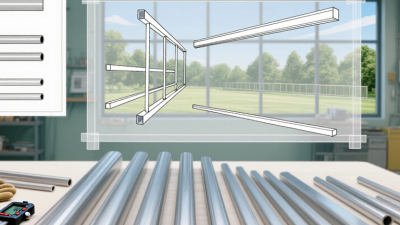
Aluminum square tubes are hollow sections with four flat sides and a consistent profile. Their corners may be sharp or slightly rounded, depending on the tooling and product specification. Unlike solid bar, a tube uses less material while still providing useful stiffness for frames, supports, and enclosures. That difference is easy to see when comparing a light tube with a solid aluminum block of similar width.

Many square tubes are made by extrusion. A heated aluminum billet is pressed through a shaped steel die, which forms the outer square and inner opening at the same time. The emerging profile is cooled, cut to length, and straightened. Some alloys receive additional heat treatment to develop particular mechanical properties. The process sounds simple. The details are not.

Wall thickness, alloy, corner radius, and dimensional tolerance can affect how a tube performs and fits. These details matter when parts must slide together or meet at a welded joint. Check the product specification rather than assuming every tube has identical dimensions. Also consider the finish: a bright surface may look clean, but appearance alone does not confirm strength or suitability. Extrusion marks can remain visible, and small variations may occur. That is worth checking before production.
Key Properties That Shape Their Performance

Aluminum square tubes offer a useful balance of low weight and structural stiffness. Their four flat sides make alignment and attachment straightforward. Many are formed by extrusion, which allows consistent dimensions and a clean finish. Alloy and temper matter, though; two tubes with identical measurements may not carry the same load. Check the supplier’s specifications rather than judging by appearance alone.

Aluminum naturally develops a thin oxide layer that slows corrosion in many environments. It is not immune to damage, especially near salt, trapped moisture, or dissimilar metals. Its thermal expansion is also greater than steel’s, so long outdoor runs may need room to move.

For a frame, compare wall thickness, unsupported span, and connection details—not just the tube’s outside dimensions. Small details matter.

Tips: Measure the actual wall thickness and inspect cut ends for burrs before assembly. If the tube will carry people or heavy equipment, have the design checked against expected loads. A lighter section can be easier to handle, but choosing one too small may lead to flex or failure. That trade-off deserves a second look.

Benefits of Aluminum Square Tubes in Project Design

Aluminum square tubes help reduce dead load in frames, guards, display stands, and outdoor structures. The Aluminum Association lists aluminum’s density at about 2.7 g/cm³, roughly one-third that of steel. That lower weight can make long sections easier to lift and position on site. It also reduces the load carried by supports, though the final design still depends on alloy, temper, wall thickness, and connection details. A thin-walled tube may dent where a thicker section would not. Small detail, big difference.

The International Aluminium Institute reports that recycling aluminum uses about 5% of the energy required to produce primary aluminum. This gives recycled-content tubes a meaningful material-efficiency advantage, provided their source and specifications are verified. Aluminum also forms a protective oxide layer, which helps in many exposed applications; it does not make every alloy suitable for every environment. Near salt spray or dissimilar metals, designers should consider coatings, drainage, and isolation at joints. There is a trade-off: aluminum’s lower stiffness than steel can mean larger sections or closer supports. Check span and deflection early, not after the frame is built.

Common Applications Across Industries

Aluminum square tubes serve different needs across construction, transportation, manufacturing, and furniture production. Builders use them for lightweight frames, partitions, and support assemblies where a clean profile matters. In vehicles, they can form equipment racks, trim, or enclosure frames, helping reduce weight. Workshops also use them for machine guards and workstations. The choice is not always obvious. Tube size, alloy, wall thickness, and connection method affect strength, so appearance alone is a poor guide.

In retail displays and office furniture, square tubes create neat legs, shelving frames, and modular stands. Outdoor equipment and some marine components may use them too, but salt and trapped moisture can cause corrosion over time. Protective finishes and sensible drainage details help, though they do not remove the need for inspection. A tube that works well indoors may be the wrong choice near the coast.

Tips: Match the tube’s alloy and wall thickness to the actual load and environment. Check how joints will be made; thin walls can distort during welding or fastening. Keep cut ends smooth, and avoid pockets where water can collect. If the assembly carries people or machinery, have a qualified engineer review the design. Test a small joint first. It can reveal problems early.

Why Choose Aluminum Square Tubes for Your Project? – Common Applications Across Industries

Aluminum square tubes combine relatively low weight, corrosion resistance, and the flexibility of extruded profiles. The examples below show common applications and indicative selections; actual requirements depend on loads, environment, design, and applicable standards.

Industry Common Applications Indicative Tube Dimensions Common Alloy / Temper Why Aluminum Square Tube Is Used Design Considerations
Construction and architecture Window and door frames, interior partitions, canopies, handrails, and façade subframes Approximately 25 × 25 × 1.5 mm to 100 × 100 × 4 mm 6063-T5 or 6063-T6 Extruded profiles can be produced with consistent dimensions and finished with anodizing or paint. The material’s low density can make handling and installation easier. Check span, connections, deflection, wind loads, and local building requirements. Protective finishes and drainage details may be needed outdoors.
Transportation Vehicle body framing, storage racks, equipment enclosures, and non-primary structural assemblies Approximately 30 × 30 × 2 mm to 100 × 100 × 5 mm 6061-T6 or 6063-T6 A favorable strength-to-weight ratio can help reduce assembly mass. Square sections also provide convenient faces for mounting panels and fittings. Account for vibration, impact, fatigue, joint design, and heat-affected zones if welding. Structural vehicle components require application-specific validation.
Renewable energy Solar-panel support frames, mounting rails, and equipment supports Approximately 25 × 25 × 2 mm to 80 × 80 × 4 mm 6063-T5 or 6061-T6 Low mass supports easier handling on site, while corrosion resistance can be useful in outdoor installations. Extrusion allows profiles to be adapted for mounting systems. Size for wind and snow loads, panel layout, and support spacing. Consider galvanic corrosion where aluminum contacts dissimilar metals, and follow the project’s structural requirements.
Industrial equipment Machine guards, workstations, equipment frames, carts, and instrument enclosures Approximately 20 × 20 × 1.5 mm to 80 × 80 × 5 mm 6061-T6 or 6063-T5 The square shape offers flat mounting surfaces and can simplify cutting, drilling, and assembly. Its relatively low weight is useful for movable equipment and modular frames. Check load paths, fastener pull-out, local wall deformation, and required stiffness. Select wall thickness and joining method for the actual load and operating conditions.
Agriculture Greenhouse framing, irrigation equipment supports, access structures, and lightweight equipment frames Approximately 25 × 25 × 1.5 mm to 75 × 75 × 4 mm 6063-T5 or 6061-T6 Aluminum’s natural oxide layer provides corrosion resistance in many environments, and its light weight can make installation and maintenance more manageable. Exposure to fertilizers, cleaning chemicals, or wet soil can affect corrosion behavior. Confirm compatibility, drainage, anchoring, and local wind-load requirements.
Furniture and retail fixtures Display stands, shelving frames, table bases, partitions, and portable booths Approximately 15 × 15 × 1.2 mm to 50 × 50 × 3 mm 6063-T5 or 6063-T6 Extruded tubing is available in a range of finishes and can be cut to suit different layouts. Its lower density can help keep movable fixtures manageable. Consider appearance, surface finish, joint strength, edge treatment, and stability. Thin-wall sections may need inserts or reinforced connections at fastener points.

Note: Dimensions are illustrative market examples, not design specifications. Alloy availability and mechanical properties vary by product form and temper; verify material certificates, load capacity, fabrication method, and applicable standards before selection.

How to Select the Right Tube for Your Project

Why Choose Aluminum Square Tubes for Your Project?
How to Select the Right Tube for Your Project

Start with the job, not the catalog. Will the tube support a shelf, frame a gate, or carry parts on a machine? Estimate the loads, span, and connection points before choosing dimensions. Aluminum is relatively light and resists corrosion, but the right size depends on how the tube will be used. A long, thin section may flex more than expected.

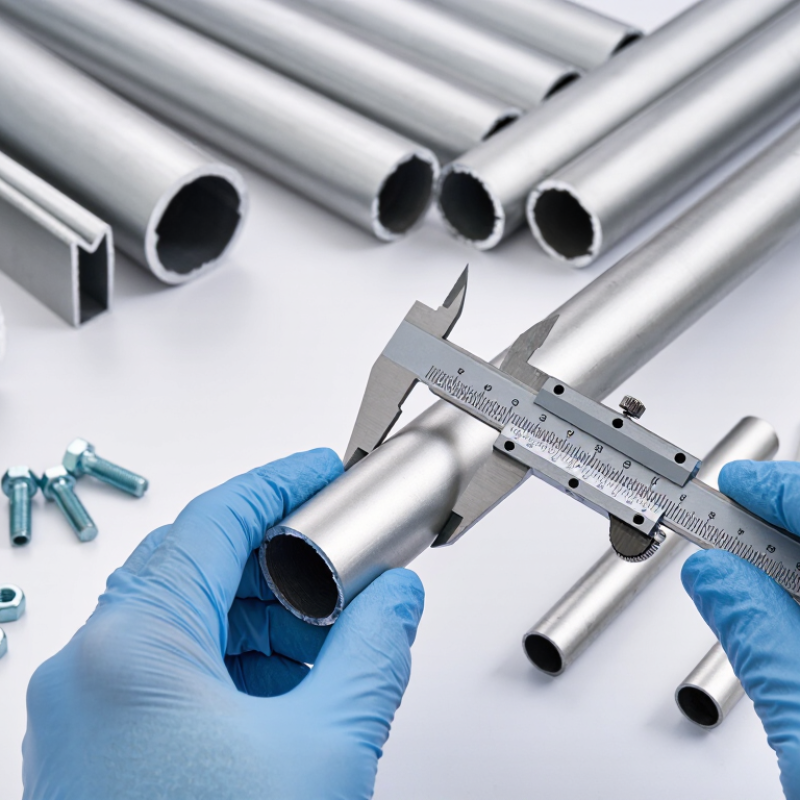
Check the outside width, wall thickness, and length against your drawings. Small differences can affect how parts fit together. Check alloy and temper, too; strength, formability, and weldability vary between options. Use supplier specifications to verify mechanical properties rather than relying on a general label. Measure twice. A quick test fit can reveal problems that a drawing misses.

Consider the working environment and finishing process. Outdoor exposure, frequent cleaning, and contact with other metals can influence finish and connection choices. If welding is planned, confirm the selected material suits the process and ask a qualified fabricator about joint design. It is tempting to choose the thickest wall for reassurance, but added weight and cost may not solve the real design issue. I would leave room to review the choice after checking a sample; that extra step can feel fussy, yet it often catches fit problems early.

Why Choose Aluminum Square Tubes for Your Project?

Compare Typical Material Density

Aluminum’s typical density is about 2.70 g/cm³, substantially lower than steel, stainless steel, and copper. This can help reduce the weight of a square-tube assembly. Values shown are typical material densities; actual values vary by alloy and product.