How to Choose Aluminium Ceiling Extrusion in 2026?
Choosing the right Aluminium Ceiling Extrusion in 2026 requires more than comparing catalog prices. A ceiling profile must fit the building’s design, climate, installation method, and maintenance plan. Its shape may look simple, yet small dimensional errors can create visible gaps, rattling panels, or difficult corner joints.
Material selection deserves careful attention. Aluminium alloy, temper, wall thickness, and surface treatment influence strength, appearance, and service life. Powder coating can provide a wide color range, while anodizing creates a durable metallic finish with a distinct texture. However, performance depends on preparation, coating quality, and environmental exposure. A profile installed near a humid pool may need different protection than one used in a dry office.
Real projects reveal details that drawings often miss. Check sample lengths under natural and artificial light. Test how easily installers can cut, join, and replace sections. Confirm tolerances with the supplier, not only with a product brochure. Ask for test reports, material certificates, finish specifications, and installation guidance. Local fire, ventilation, structural, and building requirements should also be reviewed by qualified professionals.
The cheapest option can become expensive.
That lesson is easy to overlook. A reliable decision balances visual consistency, engineering data, supply stability, and long-term upkeep. It also leaves room for honest uncertainty. No single extrusion suits every ceiling. This guide explains the practical questions that can help architects, contractors, and buyers choose with greater confidence in 2026.
Aluminium Ceiling Extrusion Fundamentals: Alloys, Tempers, and Profile Types
How to Choose Aluminium Ceiling Extrusion in 2026?
Choosing aluminium ceiling extrusion in 2026 starts with the metal, not the surface appearance. For architectural ceilings, 6063 alloy remains practical because it extrudes cleanly and accepts anodizing well. Its balanced magnesium and silicon content supports sharp ribs, smooth edges, and consistent color. 6061 offers higher strength, but it can be less forgiving during complex forming and finishing. That difference matters when a long linear panel must stay straight above a busy corridor. Small details decide performance.
Temper describes how the alloy was strengthened after extrusion. T5 usually means air-cooled material that is artificially aged, while T6 involves solution heat treatment and artificial aging. T6 can provide greater strength, yet excessive hardness may complicate bending, punching, or later adjustments. Ask for the temper, thickness range, and mechanical test values on the mill certificate. Do not rely on “6063” alone. A recurring specification mistake is choosing a temper before checking the installer’s fabrication method. That choice can create cracked corners or visible springback.
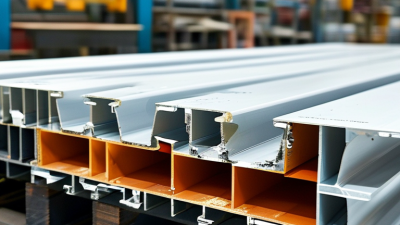
Profile type should follow the ceiling’s visual rhythm and maintenance needs. Clip-in systems create a neat, accessible grid and suit concealed suspension layouts. Lay-in profiles support faster replacement, while linear and baffle sections emphasize direction and spacing. Open-cell designs improve visual depth but require coordination with lighting, sprinklers, and ventilation. For exposed interiors, check wall thickness, span, joint movement, and fixture loads. Request finish samples under the project’s actual lighting. Colour matching can still disappoint. A small sample may hide extrusion lines, shade variation, or edge distortion.
Choose 6063-T5 for Architecture: 2.70 g/cm³ Density and High Extrudability
How to Choose Aluminium Ceiling Extrusion in 2026?
For architectural ceilings, 6063-T5 remains a practical choice because it combines low density with reliable extrusion performance. Its density is approximately 2.70 g/cm³, according to the Aluminum Association’s Aluminum Standards and Data. A 1.2 mm solid sheet would weigh about 3.24 kg per square metre before adding ribs, coatings, or suspension parts. Real profiles vary.
That matters during installation. Long ceiling panels can be lifted more easily, while narrow channels can hold clean edges and concealed lighting. ASTM B221 identifies 6063-T5 as an extrusion alloy suitable for architectural shapes. Typical minimum tensile strength is about 152 MPa, with yield strength near 110 MPa, depending on section and thickness. These figures support normal interior ceiling applications, but they do not replace structural calculations.
Check the die design, wall thickness, straightness, and temper consistency with the extruder. The alloy extrudes smoothly, yet overly thin corners may distort during cooling or finishing. Anodizing can improve surface durability, but colour matching across production batches still needs inspection. This is where specifications can disappoint. Ask for mill certificates, dimensional reports, and sample lengths before approving a large order. Environmental data from the International Aluminium Institute also shows that recycled aluminium can substantially reduce production emissions, but the actual benefit depends on the material mix and processing route.
How to Choose Aluminium Ceiling Extrusion in 2026?
Choose 6063-T5 for Architecture: 2.70 g/cm³ Density and High Extrudability
6063-T5 has a nominal density of 2.70 g/cm³, comparable to other widely used aluminium extrusion alloys. Its excellent extrudability supports complex, thin-walled ceiling profiles with smooth surfaces and consistent dimensional control, making it a practical choice for architectural applications.
Values shown are nominal room-temperature densities for commonly used wrought aluminium extrusion alloys. Density may vary slightly by composition and manufacturing condition. Reference: EN 573-3 alloy composition designations and commonly published engineering data.
Set Profile Dimensions Using Span, Load, and EN 755 Tolerance Requirements
Choosing an aluminium ceiling extrusion starts with the clear span, not appearance. Measure the support-to-support distance, then identify dead load, maintenance load, lighting, and possible service access. For a simply supported member under uniform load, deflection follows the 5wL⁴/384EI relationship. Span matters dramatically.
The International Aluminium Institute’s material-flow reporting places buildings and construction at roughly one quarter of global aluminium use. That scale makes disciplined specification important. Select the alloy and temper first, then check the profile’s moment of inertia, section modulus, and connection capacity. A narrow profile may carry the load, yet still feel visibly flexible. Nobody likes a wavering ceiling line.
EN 755-9
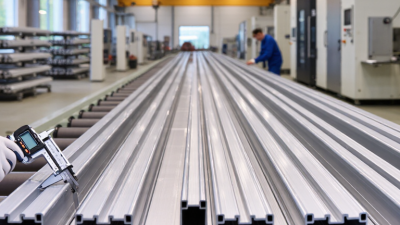
defines dimensional tolerances for extruded profiles, including permitted variation in wall thickness, straightness, twist, and profile dimensions. Use those limits when setting slot widths, clips, and visible joints. Do not design every interface around the nominal drawing size. Allow the applicable tolerance range, finish thickness, and installation adjustment. My earlier specifications were too optimistic when they ignored accumulated tolerances across long runs. That mistake can turn a neat 2 mm joint into an uneven shadow line. Confirm the exact alloy, temper, profile class, span, and load assumptions with the extrusion supplier and the project engineer.
Specify Finishes: 10–25 μm Anodizing or 60–120 μm Powder Coating
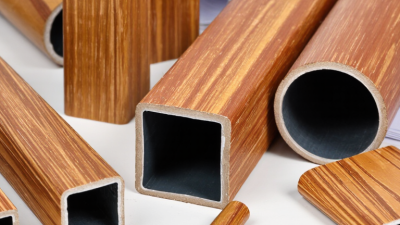
Choosing an aluminium ceiling extrusion in 2026 requires more than checking alloy and profile shape. The finish controls appearance, cleaning resistance, and service life. For controlled indoor spaces, 10–25 μm anodizing gives a hard, metallic surface. Its subtle sheen can reveal extrusion lines, scratches, and uneven polishing. That is not always a defect, but it must match the approved sample.
Powder coating at 60–120 μm provides stronger colour coverage and broader visual choices. It can hide minor surface variation better than anodizing. However, thick coating may soften sharp details and reduce the apparent opening of narrow profiles. Ask for measurements at flat faces, corners, and internal channels. One reading is not enough. Inspectors should also check adhesion, colour consistency, and visible pinholes after curing.
The ceiling location should guide the specification. Dry offices may need less protection than humid transport halls or coastal interiors. Cleaning chemicals matter too. Confirm their compatibility before approval. I have seen attractive samples fail when the cut ends were left unprotected or poorly deburred. Small details matter. Specify pretreatment, coating thickness, gloss range, colour tolerance, and packaging requirements in writing. A perfect sample can still become a poor installation when handling marks, mixed batches, or unsealed joints are ignored. Allow realistic tolerances, and review them before production.
Verify Fire, Acoustics, Recycled Content, and Supplier Quality Certifications
How to Choose Aluminium Ceiling Extrusion in 2026?
Selecting aluminium ceiling extrusion now requires more than checking profiles, finishes, and prices. Fire performance should match the complete ceiling assembly, including panels, insulation, coatings, and suspension parts. Request current test reports from accredited laboratories. Check the tested configuration carefully. A certificate for one thickness may not cover another.
Acoustic performance also needs practical verification. Look for measured sound absorption, sound reduction, and reverberation data. Ask whether testing used the same perforation pattern, backing fleece, and cavity depth. Recycled content claims should identify pre-consumer and post-consumer percentages. They should also explain calculation boundaries. Vague environmental language is not enough. It creates doubt.
Tips: Keep a document checklist before approving samples. Verify fire, acoustic, recycled-content, and quality certificates with the issuing laboratory or certification body. Inspect extrusion corners, coating consistency, and bundle labels during delivery. Supplier quality certifications can show process control, but they do not replace product testing. Visit the production site when the project is sensitive. Ask about traceability, nonconforming material, and corrective actions. A polished certificate is not proof of every product batch. I have seen specifications look complete while missing installation limits. That gap deserves attention. Small omissions can become costly ceiling changes later.